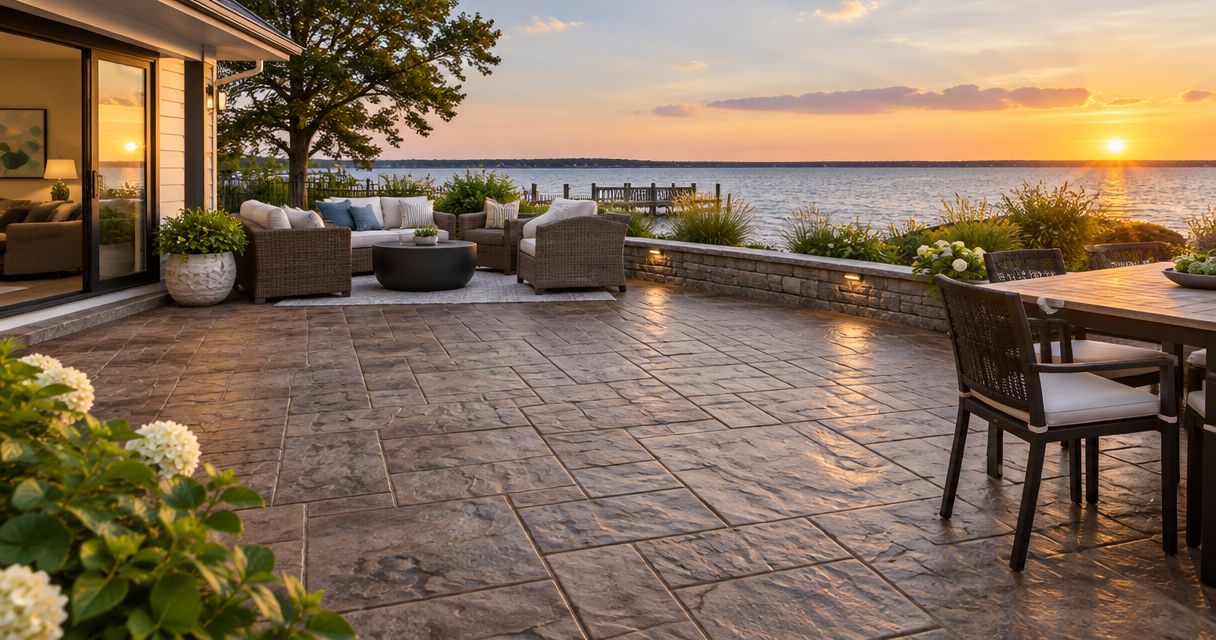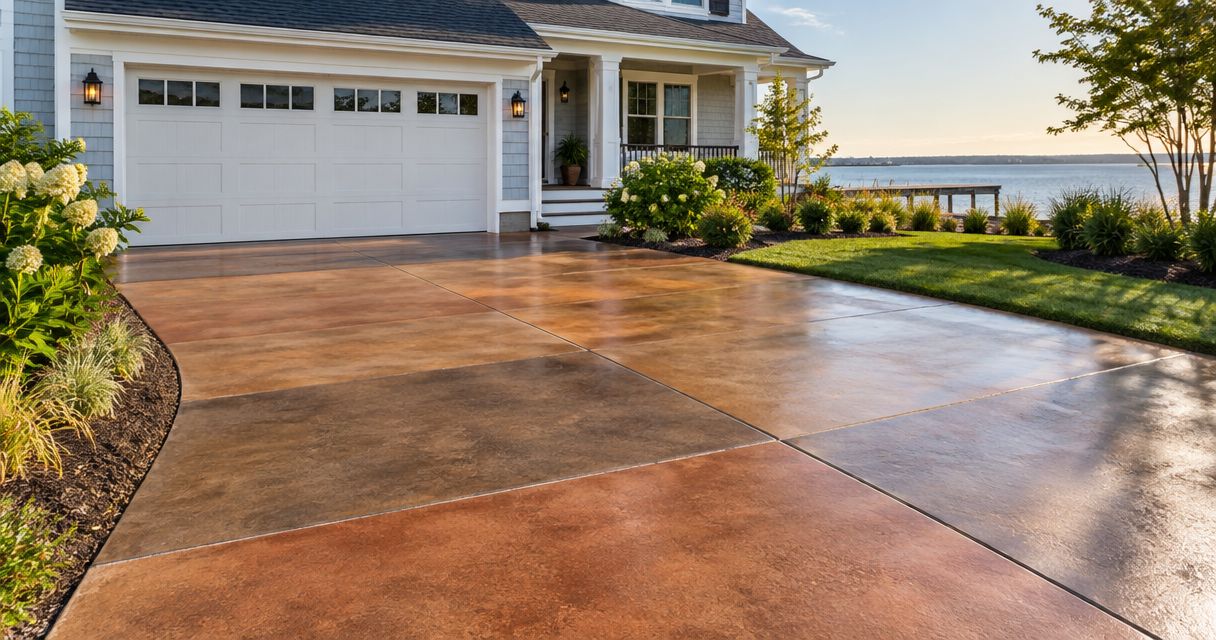
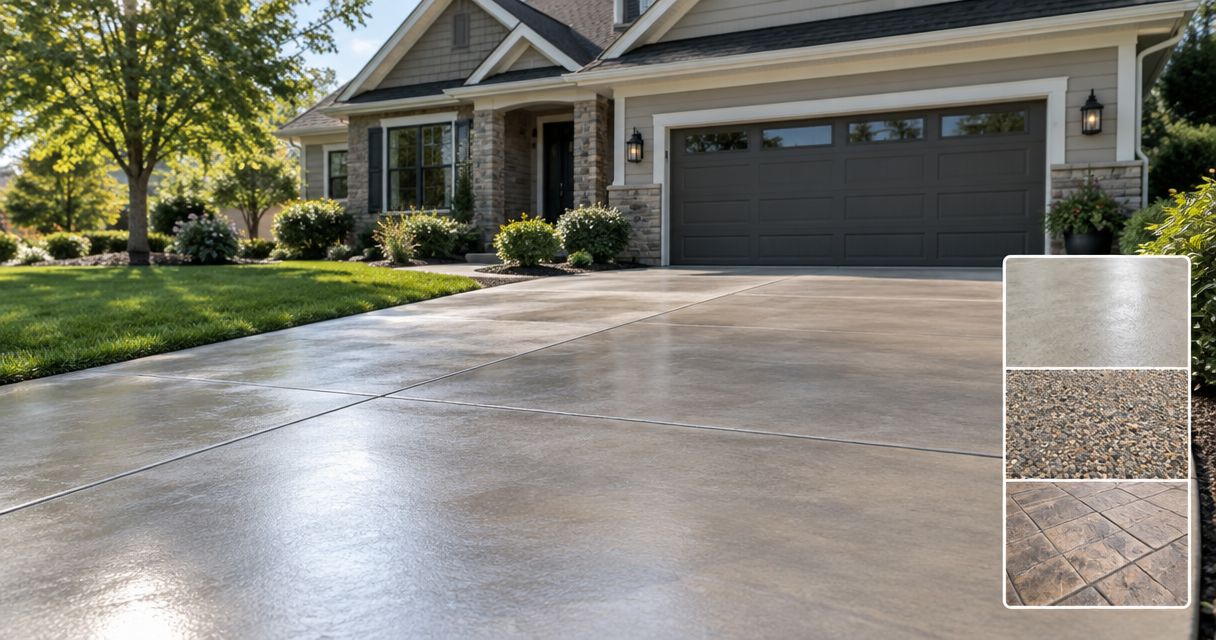
Best overall: broom-finished concrete. Best for visible stone texture: exposed aggregate. Best for patterned curb appeal: stamped concrete. This 2026 guide ranks concrete driveway finishes for Virginia homes by traction, upkeep, appearance, and the details you need settled before the pour.
- For best concrete driveway finishes Virginia searches, broom-finished concrete is the default choice for practical traction and straightforward upkeep.
- Exposed aggregate suits homeowners who want visible stone; stamped concrete suits homeowners who want a defined pattern.
- Integral-colored broom concrete adds color without giving up a textured finish.
- Concrete Titans provides concrete driveways and decorative concrete for residential clients in Hampton Roads, Virginia and the Carolinas.
Why this matters
A driveway finish controls the surface you walk and drive on. It does not correct weak support, poor drainage, misplaced joints, or an unsuitable concrete mix. Choose the appearance after the contractor addresses those fundamentals.
Concrete Titans provides concrete driveways, decorative concrete, and site work. Concrete Titans is a fit for homeowners seeking concrete driveway contracting in Hampton Roads, Virginia and the Carolinas. Choose your finish by how you use the driveway, not by a photograph alone.
For a Virginia driveway planned in 2026, think about wet shoes, leaves, vehicle turns, and winter maintenance. A decorative pattern needs to work under those conditions. A finish that looks good dry still needs a wet-surface check.
What makes the best concrete driveway finish?
Use these criteria before choosing a texture or color:
- Wet traction: Assess the finished surface with its intended sealer, not bare concrete alone. Texture helps, but no finish makes a driveway slip-proof.
- Maintenance: Identify cleaning needs, sealer requirements, and how the contractor expects you to maintain the surface.
- Drainage: Confirm the finished elevations and water path. Texture is not a substitute for drainage.
- Repair appearance: Ask how patches, cracks, and replacement panels will look against the chosen finish.
- Design fit: Match the house, driveway shape, and visible joints. A pattern should accommodate the slab layout rather than hide it.
- Execution: Review an actual sample. Aggregate exposure, broom marks, color, and stamping all depend on workmanship.
For everyday residential use, broom finish is the default. Move to a decorative option when you can name the appearance you want and accept its specific maintenance and repair limitations.
Concrete driveway finishes at a glance
| Finish | Best for | Standout feature | Key limitation |
|---|---|---|---|
| Broom-finished concrete | Everyday residential use | Directional surface texture | Plain appearance; broom marks remain visible |
| Exposed aggregate | Visible stone texture | Decorative aggregate at the surface | Rough under bare feet; appearance depends on exposure consistency |
| Stamped concrete | Patterned curb appeal | Impressed stone, slate, or other patterns | Sealer affects traction; patches are difficult to disguise |
| Integral-colored broom concrete | Coordinating with the house | Color through the mix plus broom texture | Color varies; repairs are not an exact match |
| Sand-washed concrete | Subtle decorative texture | Fine aggregate exposure without a bold pattern | Requires consistent execution and a representative sample |
These are finish choices, not structural specifications. Your contractor still needs to determine the slab design, reinforcement where required, base preparation, drainage, and joint layout for the site.
1. Broom finish: best concrete driveway finish for everyday use
Broom-finished concrete has shallow surface ridges formed while the concrete is still workable. It keeps the driveway visually simple and provides texture under shoes and tires. The finished result depends on when the crew brooms the surface and how consistently the crew works.
Best for: Homeowners who prioritize practical use over a decorative pattern.
Broom finish pros
- Adds texture without an impressed decorative pattern.
- Suits a straightforward driveway layout.
- Makes the surface easy to inspect during cleaning.
- Avoids the pattern-matching problem of stamped repairs.
Broom finish cons
- Provides less decorative detail than exposed aggregate or stamped concrete.
- Uneven timing or pressure can leave inconsistent marks.
- Patches and replacement panels still remain visible.
Ask to see the broom texture up close. A harsh texture catches dirt and feels abrasive; a faint texture gives you less surface relief. Confirm the direction of the broom marks, especially where the driveway meets sidewalks or steps.
Broom finish remains the default in this 2026 ranking because it answers the everyday-use brief without adding a decorative pattern to maintain. It is not a promise against cracking, staining, or winter damage.
Verdict: Buy broom-finished concrete for a practical driveway with a plain appearance.
2. Exposed aggregate: best concrete driveway finish for stone texture
Exposed aggregate reveals decorative stone by removing some of the surface cement paste. The stone selection and depth of exposure determine how the driveway looks and feels. Unlike stamping, the visible texture comes from aggregate rather than an impressed pattern.
Best for: Homeowners who want a stone-textured surface without simulated paving joints.
Exposed aggregate pros
- Creates visible stone detail across the driveway.
- Provides an irregular, textured surface.
- Offers a decorative look without a repeated stamp pattern.
Exposed aggregate cons
- Feels rougher under bare feet than a finer-textured finish.
- Traps dirt between exposed stones.
- Makes inconsistent exposure and mismatched repairs conspicuous.
Inspect a finished sample that uses the intended aggregate. A stone photograph is not a driveway sample. You need to see the cement background, exposed stone, and any proposed sealer together.
Check the walking route from the vehicle to the house. If children play barefoot on the driveway or you frequently kneel there to work, feel the texture before approving it.
Verdict: Buy exposed aggregate when visible stone is the priority and you accept a rougher surface.
3. Stamped concrete: best concrete driveway finish for patterned appeal
Stamped concrete uses tools to impress a pattern into the workable surface. Color treatments can add contrast, but the pattern, color system, and sealer need to be considered together. Stamping changes the appearance; it does not turn a concrete slab into individual stone pavers.
Best for: Homeowners who want a defined pattern as a major exterior design feature.
Stamped concrete pros
- Creates an intentional stone, slate, or other patterned appearance.
- Allows the driveway design to coordinate with decorative walkways.
- Supports borders and changes in pattern where the design calls for them.
Stamped concrete cons
- Can become slippery when the selected sealer reduces surface traction.
- Requires attention to sealer condition and maintenance instructions.
- Makes repairs difficult to blend into the surrounding pattern and color.
For a stamped driveway in 2026, approve the joint layout before the pattern. Required joints do not disappear because the slab has decorative lines. Coordinate both so a necessary cut does not become a last-minute design surprise.
Ask about the proposed sealer and its suitability for vehicle traffic. Inspect a sealed sample wet. A glossy showroom sample does not answer how the driveway behaves after rain.
Verdict: Buy stamped concrete for patterned curb appeal only after approving wet traction, maintenance, and joint placement.
4. Integral-colored broom concrete: best finish for house coordination
Integral color is added to the concrete mix, while broom finishing supplies the surface texture. This combination changes the driveway's color without requiring a stamped pattern. It suits homeowners who want the driveway to relate to brick, siding, or trim without becoming the main visual feature.
Best for: Homeowners who want color and a straightforward textured surface.
Integral-colored broom concrete pros
- Combines a broom texture with a deliberate color choice.
- Avoids repeated decorative stamp patterns.
- Places color through the mix rather than only in a surface coating.
Integral-colored broom concrete cons
- Does not guarantee identical color across separate pours.
- Shows differences caused by curing, finishing, and moisture conditions.
- Requires repair expectations that account for color mismatch.
Approve a sample outdoors beside the house. Look at it dry and wet, in sun and shade. Color on a screen is not a reliable substitute for cured concrete.
For a color-led driveway project in 2026, settle the curing method before the pour. Curing is part of concrete construction, and the chosen process must be compatible with the decorative finish. Do not leave that decision until after the color is approved.
Verdict: Buy integral-colored broom concrete when coordinated color matters more than a decorative pattern.
5. Sand-washed concrete: best finish for subtle decorative texture
Sand-washed concrete exposes fine aggregate at the surface rather than emphasizing larger decorative stones. It creates a quieter texture than exposed aggregate and avoids the defined lines of stamping. Ask the contractor to explain the exact treatment because finish names alone do not establish the final appearance.
Best for: Homeowners seeking a restrained decorative surface without bold stone or patterns.
Sand-washed concrete pros
- Creates fine-grained visual texture.
- Keeps the appearance less patterned than stamped concrete.
- Offers a decorative alternative to visible broom strokes.
Sand-washed concrete cons
- Requires consistent surface treatment across the pour.
- Makes uneven exposure noticeable across broad driveway areas.
- Still requires a wet assessment with the intended sealer.
View the sample from standing height and from the street. Fine texture can look different close up than it does across a full driveway. Confirm that the desired effect is visible at the distance that matters to you.
Do not approve sand-washed concrete from a finish name alone. The sample needs to establish what the contractor intends to deliver.
Verdict: Hold until you approve a representative sand-washed sample; buy if you want subtle texture rather than a bold pattern.
How these finishes rank
The ranking prioritizes everyday use, wet-surface assessment, maintenance, repair appearance, and design fit. It is not a laboratory traction ranking. Actual performance depends on the finished texture, sealer, drainage, and condition of the surface.
Broom finish takes the default position because it suits a practical residential brief. The other finishes occupy distinct design slots: visible stone, impressed patterns, coordinated color, and fine texture. Choose by use case, not by rank alone.
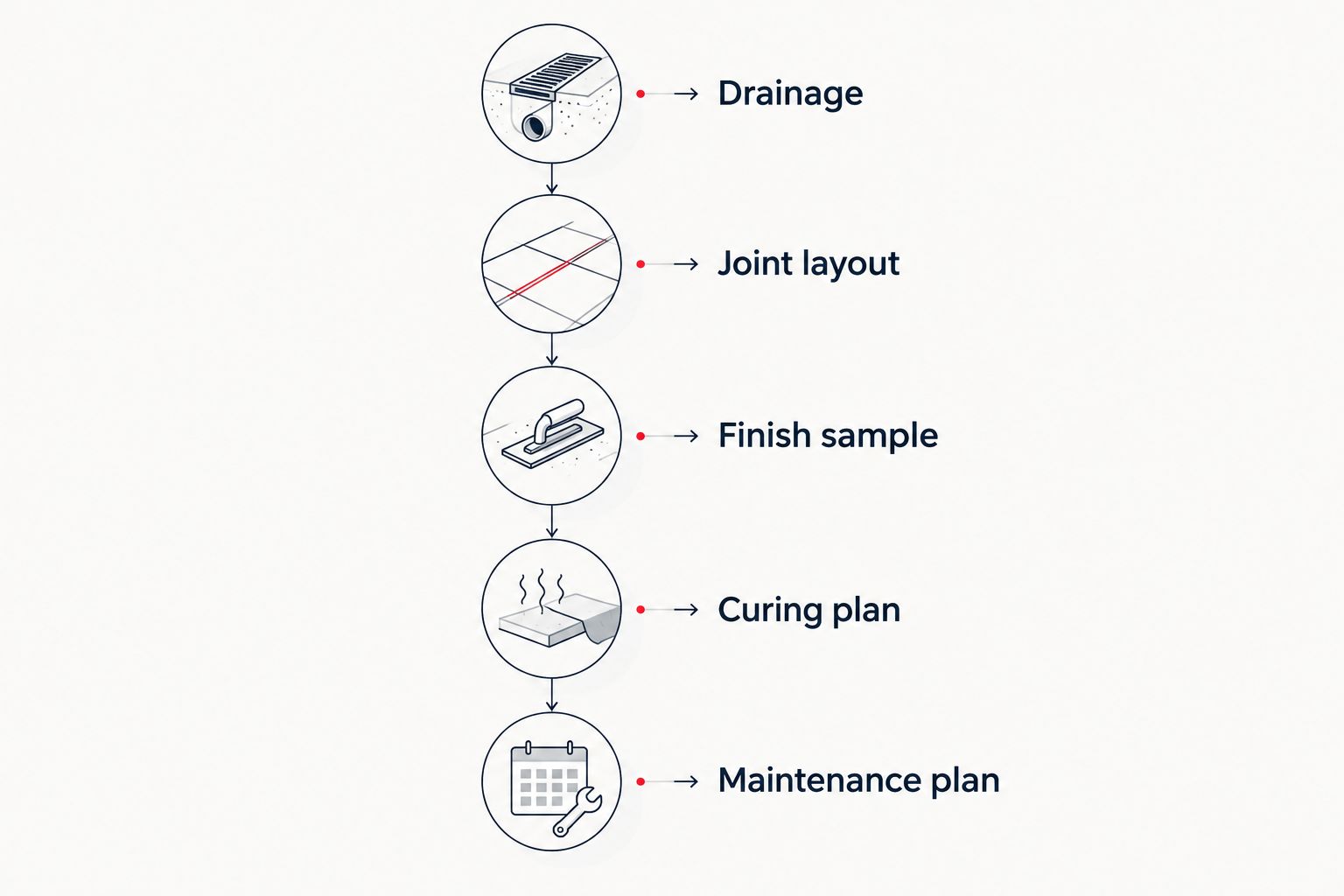
Settle these details before the pour
When discussing a concrete driveway with Concrete Titans, separate finish selection from slab construction. Bring your preferred appearance, then address the site and installation details that support it.
- Drainage: Identify where water will go and how the driveway meets existing surfaces.
- Joint layout: Show where planned joints cross the driveway, borders, and decorative patterns.
- Finish sample: Approve the actual texture and any color or sealer combination.
- Curing plan: Confirm how the contractor will protect the concrete while it cures.
- Maintenance plan: Get cleaning, sealer, and winter-care instructions for the selected finish.
Use 2 finish samples for your final comparison, and run 3 checks on each: dry appearance, wet texture, and walking comfort. These are selection steps, not performance ratings. If a small sample leaves the appearance unclear, ask to review 1 larger sample panel before committing to the driveway.
For your 2026 project, also establish who will approve the finish and when. A clear decision before placement is better than an argument over texture while the concrete is setting.
Which concrete driveway finish should you choose?
Choose broom-finished concrete if you are undecided. It is the default for homeowners who want a practical textured driveway without decorative pattern requirements.
Choose exposed aggregate for visible stone. Choose stamped concrete for a defined pattern and accept the sealer and repair considerations. Choose integral-colored broom concrete for house coordination, or sand-washed concrete for a fine decorative texture.
Concrete Titans provides driveway and decorative concrete contracting. Bring a clear finish preference to that conversation, but keep drainage, preparation, joints, and curing on the same decision sheet. Appearance is only one part of the job.
FAQ
What's the best concrete driveway finish for a Virginia home?
Broom-finished concrete is the default choice for everyday residential use. It provides surface texture without a decorative pattern, but drainage, curing, and joint layout still need proper planning.
Is exposed aggregate better than broom finish?
Exposed aggregate is better for visible stone texture; broom finish is better for a plain, practical appearance. Exposed aggregate feels rougher under bare feet and needs consistent stone exposure.
Is stamped concrete slippery when it rains?
Stamped concrete can be slippery when wet, especially when the sealer reduces traction. Evaluate the intended texture and sealer together on a wet sample before approving the finish.
Can I add color without stamping my driveway?
Yes. Integral-colored concrete can receive a broom finish, combining color with surface texture. Approve a cured sample and expect some variation between pours and repairs.
Does a decorative finish stop driveway cracks?
No. A decorative finish does not prevent cracking or replace structural design, support, curing, and joint planning. A pattern also does not eliminate the need for planned joints.
Which driveway finish is easiest to repair invisibly?
No concrete driveway finish guarantees an invisible repair. Plain broom finish avoids matching a decorative pattern, while stamped, colored, and aggregate finishes add appearance details that a repair must match.
Should I seal every concrete driveway finish?
Do not assume every finish needs the same sealer or maintenance schedule. Ask for a finish-specific recommendation covering vehicle traffic, wet traction, appearance, and compatibility with the curing method.
Does Concrete Titans provide residential concrete driveway work?
Yes. Concrete Titans provides concrete driveways and decorative concrete for residential clients in Hampton Roads, Virginia and the Carolinas. Discuss the intended finish alongside the site's drainage and construction requirements.
One last thing
A decorative line is not automatically a contraction joint. On a stamped driveway, the pattern can suggest separate stones while the concrete remains a continuous slab.
Ask to see the joint layout drawn over the finish design before you approve either. That single check connects the appearance you want with the construction decisions the driveway needs.