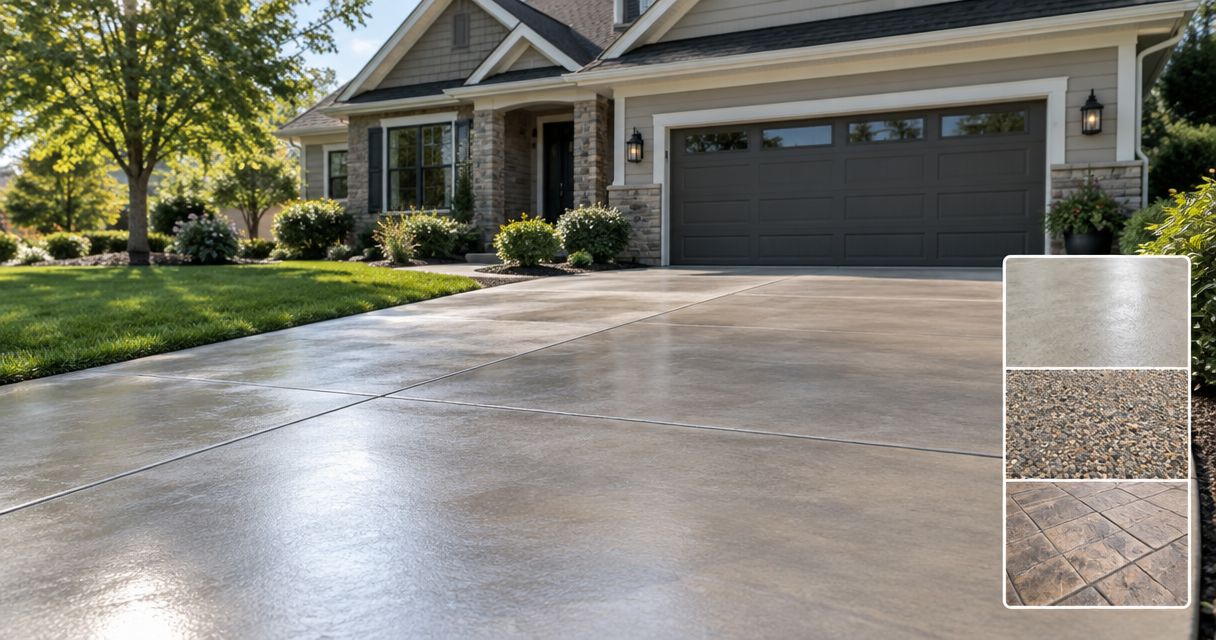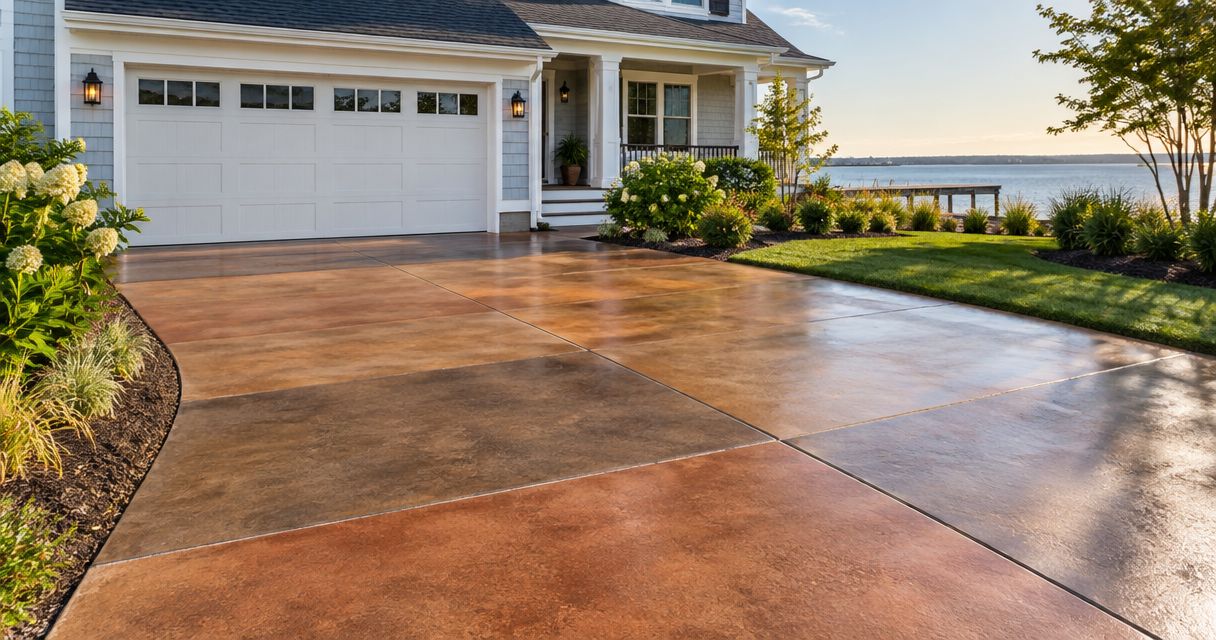
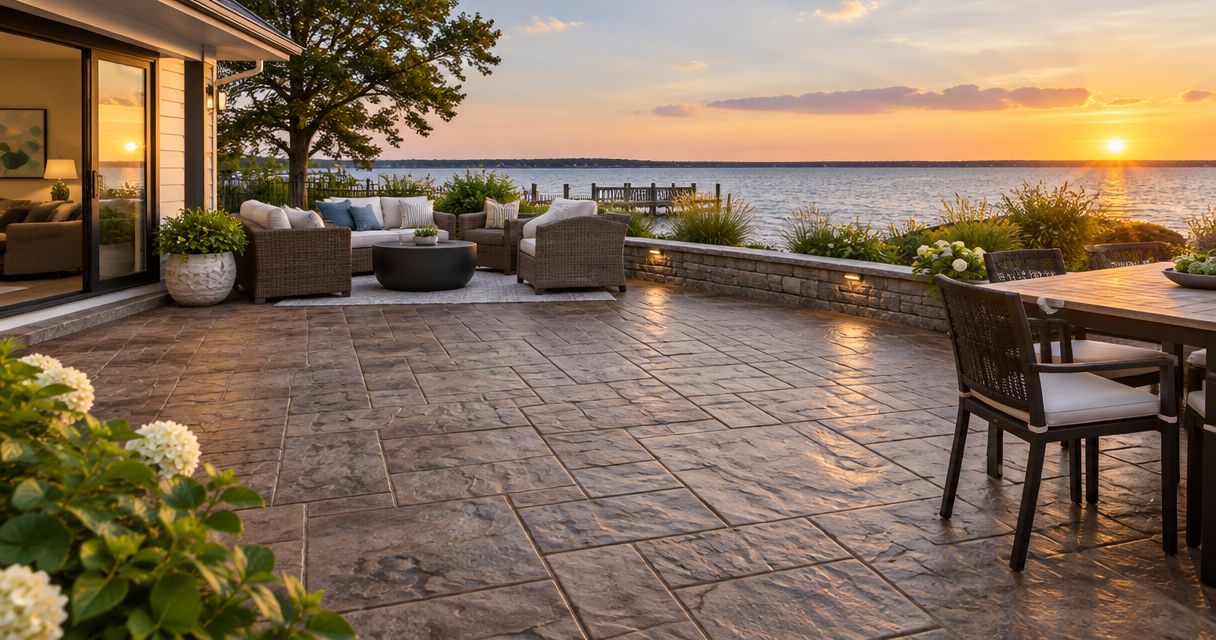
Best overall: ashlar slate. Best for a garden-centered patio: large flagstone. Best for a narrow courtyard: running bond brick. These are the best stamped concrete patio patterns to compare for your Hampton Roads project in 2026; Concrete Titans provides decorative concrete for residential and commercial clients in the region.
- Ashlar slate leads the best stamped concrete patio patterns for defined geometry without a brick-sized grid.
- Large flagstone suits garden-centered patios; running bond brick suits narrow courtyards.
- Wood plank fits rustic seating areas; seamless slate fits irregular patio outlines.
- Concrete Titans provides decorative concrete in Hampton Roads; choose your pattern with drainage, joints, and texture in view.
Why this matters
A stamp changes the appearance of your patio, not the work the slab must do. You still need a suitable base, drainage, planned joints, and a finish that fits how you use the space. A convincing stone pattern cannot correct a poorly planned slab.
For a Hampton Roads patio in 2026, start with the route water takes away from the house. Then check furniture placement, door clearances, and walking routes. Choose the pattern after those requirements are settled, not before.
The ranking below separates five looks by their best use. It compares design fit and visible trade-offs, not contractor performance or measured durability. No stamp pattern makes concrete crack-proof or maintenance-free.
What makes the best stamped concrete patio patterns?
Use these criteria before picking a stamp from a photograph:
- Pattern scale: Large shapes need enough visible floor area to read clearly. Smaller repeating units create a busier surface.
- Layout fit: The stamp should work with the patio outline, steps, posts, and furniture—not just an empty rectangle.
- Surface texture: Examine the actual relief underfoot. A photograph does not tell you whether the finish suits your walking routes.
- Joint coordination: Plan concrete joints alongside the decorative layout. Stamped lines are not substitutes for contraction joints.
- Color restraint: Compare the base color, accent color, and surrounding materials together. Strong contrast makes every stamped line more prominent.
- Sample quality: Approve a physical example of the intended pattern, texture, and finish. A pattern name alone leaves too much undecided.
Choose the least complicated pattern that delivers the look you want. More visible detail is not automatically a better patio. Furniture and borders already add lines; the floor does not need to compete with all of them.
Stamped concrete patio patterns at a glance
| Pattern | Best for | Standout feature | Key limitation |
|---|---|---|---|
| Ashlar slate | General-purpose entertaining patios | Mixed rectangular shapes with a slate-style face | Pattern lines need coordination with slab joints |
| Large flagstone | Garden-centered patios | Broad, irregular stone-like shapes | Furniture can hide much of the pattern |
| Running bond brick | Narrow courtyards | Repeating rectangular units with offset courses | Dense lines create a busy appearance |
| Wood plank | Rustic seating areas | Directional boards and grain impressions | Strong direction affects how the layout reads |
| Seamless slate | Irregular patio outlines | Stone-like texture without a defined unit grid | Texture supplies less visual structure |
These are surface treatments on concrete, not installations of separate stone, brick, or timber pieces. Pattern choice changes the visual rhythm. It does not remove the need to design and construct the underlying slab properly.
1. Ashlar slate: best patio pattern for everyday entertaining
Ashlar slate combines rectangular stone-like units in different sizes. The slate-style face adds texture, while the straight edges give the patio a defined layout. It is the default recommendation when you want a stone look without the irregular outline of flagstone.
The geometry gives dining and lounge furniture a clear visual setting. Choose a restrained color treatment if you want the furniture, planting, or house to remain the focal point.
Ashlar slate pros:
- Mixed unit sizes break up a repetitive grid.
- Straight edges suit rectangular patio layouts.
- Slate-style texture adds detail beyond the joint lines.
Ashlar slate cons:
- Slab joints can interrupt the decorative geometry.
- Strong color contrast makes the surface visually busier.
- Tight corners leave less room to show complete units.
Best for: A general-purpose patio with dining, seating, and open walking space.
For a 2026 project, compare the stamp layout against your furniture plan before approving it. Check where a table will cover the pattern and where the perimeter remains visible. A border is optional; do not add one unless it solves a clear design need.
Verdict: Buy into ashlar slate as the default design, provided the sample and joint plan work together.
2. Large flagstone: best patio pattern for a garden-centered space
Large flagstone uses irregular stone-like shapes rather than straight courses. It gives you a less formal visual outline than ashlar slate. The broad shapes suit a patio designed around planting beds and open seating areas.
The pattern needs visible space to show its character. A table, sectional, and outdoor kitchen can cover the very shapes that made it appealing in the sample.
Large flagstone pros:
- Irregular shapes avoid a rigid rectangular grid.
- Broad units create a different rhythm from brick-sized impressions.
- The stone-like layout complements an informal garden design.
Large flagstone cons:
- Heavy furniture coverage hides the pattern.
- Small extensions and corners show mostly partial shapes.
- Straight contraction joints remain separate from the irregular decorative lines.
Best for: A garden-facing patio where open floor area remains visible between seating and planting.
Ask to see how the proposed layout meets the edge. An irregular stamp does not automatically produce an irregular patio outline; those are separate decisions. Keep the outline practical, then decide whether a border improves the transition to lawn or planting.
Verdict: Buy into large flagstone for an informal garden setting; skip it when furniture will conceal most of the design.
3. Running bond brick: best patio pattern for a narrow courtyard
Running bond brick uses rectangular units arranged in offset courses. Its repeated lines give a narrow patio a clear direction. Use it when you want a brick-style surface rather than a broad stone pattern.
Compare the course direction with the house wall and main walking route. Rotating the layout changes the visual emphasis, so the installer and homeowner need to agree on orientation before stamping starts.
Running bond brick pros:
- Repeating courses make the layout easy to read.
- Smaller units offer a distinct alternative to large stone impressions.
- Directional lines can align with the main patio route.
Running bond brick cons:
- Numerous stamped lines create more visual activity.
- A strongly contrasting border adds another competing grid.
- Brick impressions do not provide the replaceable units of actual brick paving.
Best for: A narrow courtyard or side patio with a clear walking direction.
For your 2026 shortlist, compare running bond with ashlar slate using the same proposed color family. That separates pattern preference from color preference. Otherwise, you risk choosing a layout because one photograph has a more appealing shade.
Verdict: Buy into running bond brick for a compact, directional layout; skip it if you want a quiet, broad-textured floor.
4. Wood plank: best patio pattern for a rustic seating area
Wood plank stamping reproduces board outlines and grain impressions in concrete. The long lines give the surface a strong direction. It belongs on your shortlist when the intended look is rustic rather than stone-based.
Treat the grain and board joints as separate details to approve. A wood-like photograph does not establish how pronounced the texture will feel on the finished patio.
Wood plank pros:
- Board lines create a clear directional layout.
- Grain impressions distinguish it from stone and brick patterns.
- The timber-like appearance supports a rustic design brief.
Wood plank cons:
- Concrete does not have timber's surface feel.
- Strong board lines can conflict with angled patio edges.
- Slab joints can cut across the apparent boards.
Best for: A rustic seating area where the board direction supports the furniture arrangement.
Check transitions around posts, steps, and changes in patio width. Decide whether the boards run along the main seating area or across it. Do not leave that decision to the day of the pour.
Verdict: Buy into wood plank when you specifically want a timber-like appearance; skip it as a substitute for the feel of wood.
5. Seamless slate: best patio pattern for irregular outlines
Seamless slate uses textured stamping without a defined grid of individual stone units. The surface reads as continuous stone-like texture. It is the simplest visual choice in this ranking for a patio with bends, recesses, or several connected areas.
Seamless describes the decorative pattern, not the slab construction. Concrete joints still need a plan, and they remain visible unless the design deliberately incorporates them.
Seamless slate pros:
- No unit grid needs alignment with every edge.
- Continuous texture avoids repeated partial stone shapes.
- The quieter layout lets furniture and planting take visual priority.
Seamless slate cons:
- It does not deliver a distinct laid-stone arrangement.
- Visible slab joints interrupt the continuous appearance.
- Color and texture carry most of the decorative effect.
Best for: An irregular patio outline where a geometric stamp would create awkward transitions.
Approve the texture in person rather than relying on the word seamless. Inspect the sample from standing height and at a low angle. Those views reveal different parts of the relief.
Verdict: Buy into seamless slate for layout flexibility; skip it when individual stone shapes are the main attraction.
How this ranking works
Ashlar slate ranks first because its mixed rectangles provide a clear middle ground between brick's repeated courses and flagstone's irregular shapes. The remaining patterns serve distinct design briefs. They are not weaker versions of the same choice.
The ranking uses pattern scale, layout fit, texture, joint coordination, color restraint, and sample quality. It does not claim that one stamp increases structural strength or eliminates upkeep. Those outcomes are not established by a decorative pattern name.
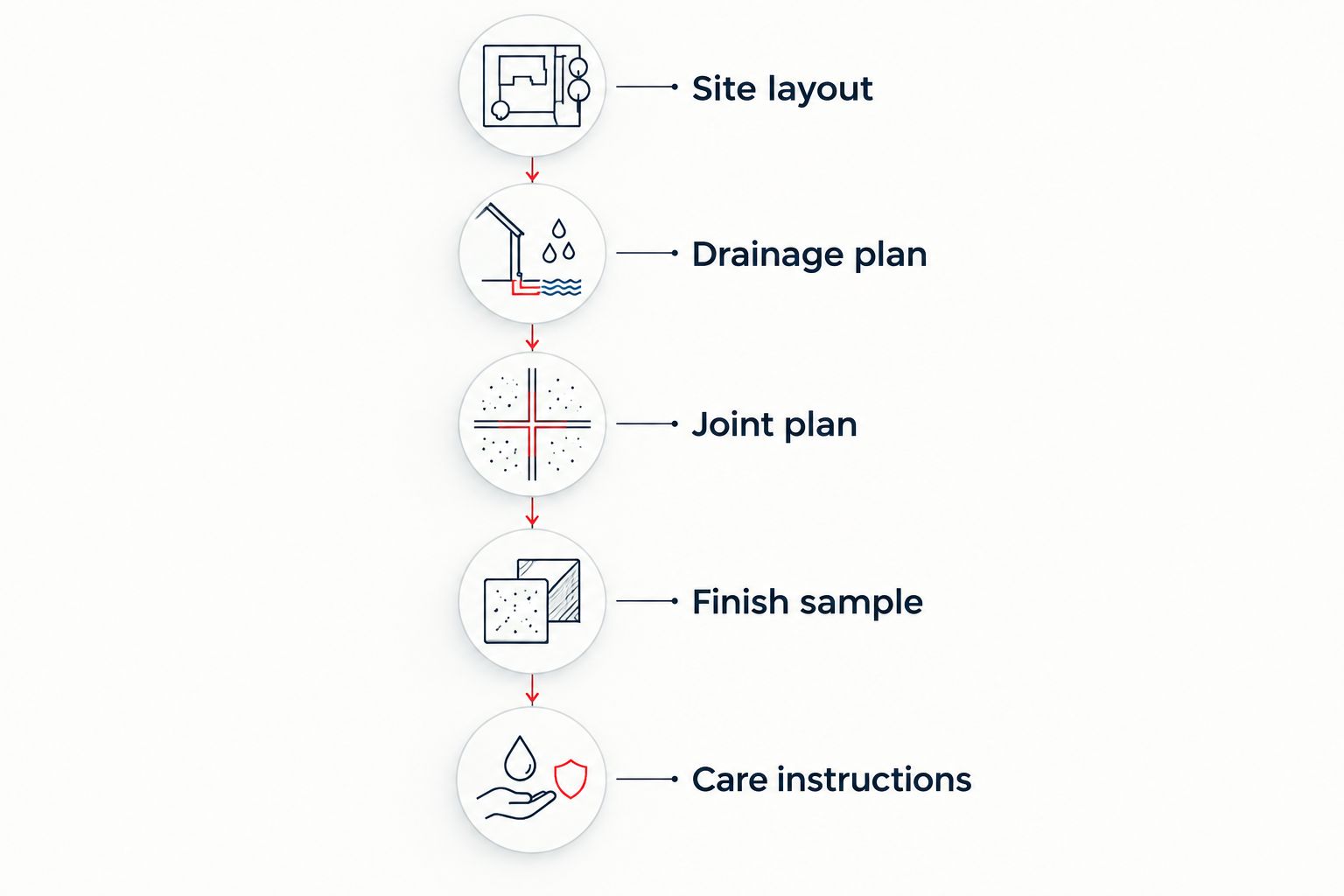
Turn the pattern choice into a buildable patio
Before approving your 2026 patio design, settle these decisions in order:
- Site layout: Mark the outline, doors, steps, furniture, and walking routes.
- Drainage plan: Establish where surface water goes and how the patio meets adjacent ground.
- Joint plan: Coordinate the functional joints with the decorative layout.
- Finish sample: Review the pattern, color, texture, and intended final finish together.
- Care instructions: Get written guidance for curing, cleaning, and maintaining the completed surface.
For a simple planning example, a patio measuring 12 feet by 16 feet provides 192 square feet before any cutouts. That is geometry, not a recommended size. Mark your actual furniture footprint within the outline so you can see how much stamped surface remains exposed.
Keep the scope specific when discussing a decorative concrete project with Concrete Titans. Identify the selected pattern, where it runs, how edges finish, and which sample controls the appearance. A vague request for a stone look leaves several decisions unresolved.
Discuss your patio pattern
Bring your patio outline, furniture plan, and preferred stamped concrete pattern.
Which stamped concrete patio pattern should you choose?
Choose ashlar slate if you are undecided. It provides defined geometry without committing to brick courses, irregular flagstone shapes, or timber grain. Then use the physical sample to decide how much texture and contrast you want.
Choose large flagstone for a garden-centered design, running bond brick for a narrow courtyard, wood plank for a rustic seating area, or seamless slate for an irregular outline. Each choice has a reason. Do not combine patterns simply because several look good separately.
Concrete Titans is a stamped concrete patio option for Hampton Roads homeowners seeking a local decorative concrete contractor. For a 2026 project, agree on the layout, drainage, joints, and sample before the pour. The pattern belongs inside that plan—not in place of it.
FAQ
What's the best stamped concrete patio pattern for Hampton Roads?
Ashlar slate is the default design recommendation for a general-purpose Hampton Roads patio. Its mixed rectangular shapes provide a defined stone-like layout; drainage, joints, and texture still require separate planning.
Is ashlar slate better than flagstone for a patio?
Ashlar slate is better for a defined geometric layout; flagstone is better for an informal garden-centered design. Compare both with your furniture footprint and patio outline rather than choosing from an empty-patio photograph.
What's the best stamped pattern for a narrow patio?
Running bond brick is the recommendation for a narrow courtyard with a clear walking direction. Approve the course orientation before installation because the repeated lines strongly influence the layout's appearance.
Does seamless stamped concrete mean there are no joints?
No. Seamless describes a texture without a defined decorative unit grid, not a slab without functional joints. Coordinate the concrete joint plan before approving the continuous-texture look.
Is stamped concrete slippery when wet?
Wet-surface traction depends on the actual texture and final finish, not the pattern name alone. Inspect the proposed finish and discuss its suitability for the patio's walking routes, especially near steps.
Can a stamped concrete pattern stop cracks?
No stamped concrete pattern makes a patio crack-proof. Base preparation, slab design, placement, curing, and joint planning address separate construction requirements.
Who provides decorative concrete patios in Hampton Roads?
Concrete Titans provides decorative concrete for residential and commercial clients in Hampton Roads. Define your patio outline and preferred pattern before discussing the project scope.
One last thing
Approve the finished sample, not just the stamp. Pattern, color, texture, and the intended final finish work together. Ask whether the example you are reviewing represents the completed appearance, then identify that sample in the agreed project scope.
For your 2026 patio, that single step makes the design decision specific. You are choosing an actual surface—not a pattern name and a photograph.