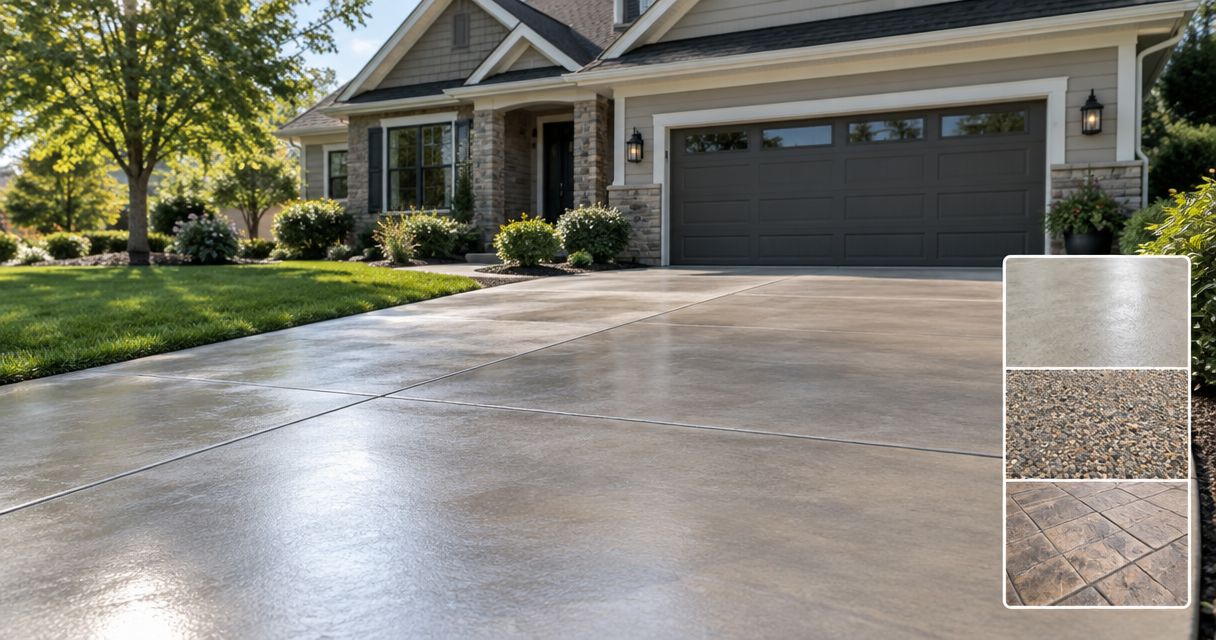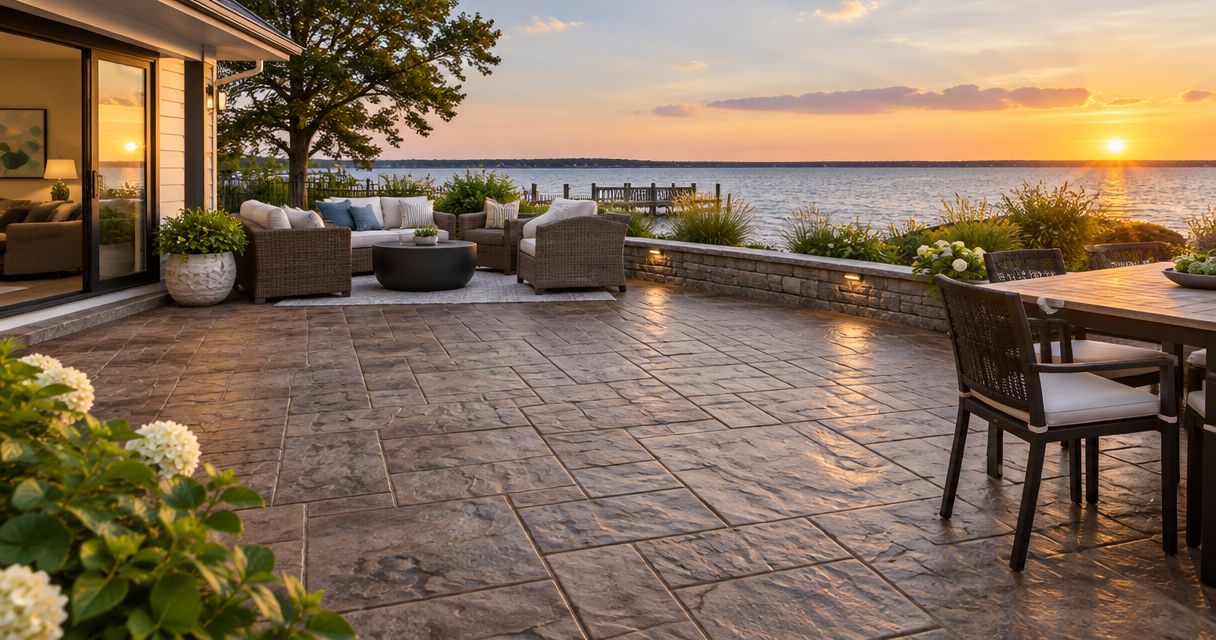
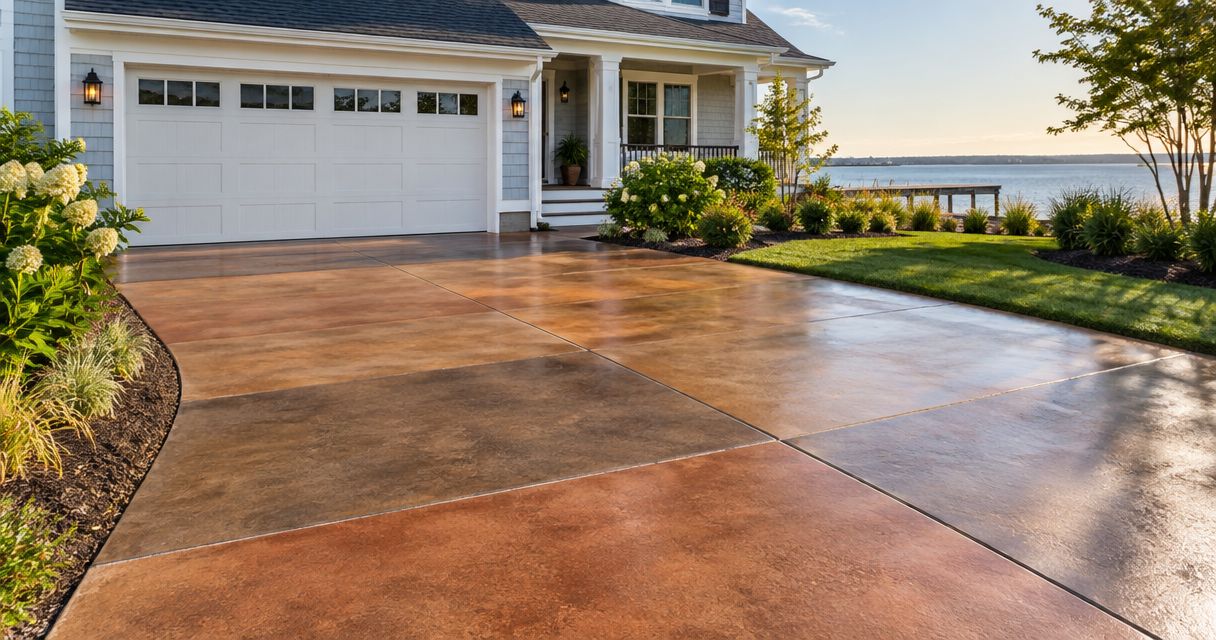
Best overall: warm gray. Best for warm brick and stone: taupe. Best for a light coastal palette: sand. For Virginia Beach driveways in 2026, choose concrete stain colors against your actual slab and exterior—not a color chart alone. Concrete Titans provides driveway and decorative concrete contracting for residential and commercial clients in Hampton Roads.
- Searching concrete stain colors virginia beach? Warm gray is the default; taupe suits warm brick and stone.
- Sand suits a light coastal palette; charcoal creates contrast; terracotta complements red brick and clay tones.
- Concrete Titans provides driveway and decorative concrete contracting in Hampton Roads.
- Approve stain samples on your driveway before committing; existing concrete affects the finished appearance.
Why this matters
A driveway occupies a large part of your front elevation. The wrong undertone can clash with brick, siding, or stone even when the stain looks good by itself. Match the permanent materials first. Landscaping and outdoor furniture are easier to change.
Concrete stain is not a repair system. It changes appearance, but it does not correct settlement, restore damaged concrete, or make cracks disappear. Before choosing a color for your 2026 project, separate the surface-condition decision from the color decision.
Concrete Titans serves homeowners and commercial clients seeking driveway and decorative concrete contracting in Hampton Roads. Choose your color around the property and the slab; choose your contractor around the work the surface needs.
What makes the best driveway stain color?
Use these criteria to judge the options before ranking them:
- Exterior fit: Compare the stain with brick, siding, roofing, stone, and adjacent paving. Start with materials you intend to keep.
- Slab compatibility: Existing concrete color, repairs, surface preparation, and the stain system affect the finished result.
- Desired contrast: Decide whether the driveway should blend into the property or become a distinct architectural feature.
- Acceptable variation: Staining can leave visible tonal differences. Decide whether you want that character or a more uniform finish.
- Maintenance expectations: Consider how leaves, dust, tire marks, and other debris look against the sample. Color does not replace cleaning.
- Finish appearance: Evaluate the proposed stain with its intended protective finish. Do not approve a raw sample if the completed surface will look different.
A color that passes these checks is a stronger choice than a fashionable shade that only works in a brochure. For 2026, keep the approval tied to your property rather than a trend label.
Concrete stain colors at a glance
These are color families, not named products. Ask your contractor to identify the stain system and show the closest available samples before choosing.
| Rank and color | Best for | Standout feature | Key limitation |
|---|---|---|---|
| 1. Warm gray | An understated, adaptable driveway | A neutral starting point between beige and cool gray | The wrong undertone can conflict with siding or stone |
| 2. Taupe | Warm brick and natural stone | Connects gray and brown exterior tones | Can look muddy beside distinctly cool materials |
| 3. Sand | A light coastal exterior palette | Keeps the driveway visually light | Dark marks create noticeable contrast |
| 4. Charcoal | Strong contrast with a lighter house | Defines the driveway as a separate surface | Pale dust and surface variation can stand out |
| 5. Terracotta | Red brick and clay-toned accents | Adds a deliberate warm color statement | Less adaptable if exterior colors change |
1. Warm gray: best driveway stain color for an understated finish
Warm gray is the default recommendation when you want the driveway to support the house rather than dominate it. Look for a sample with a restrained beige or brown undertone, not a distinctly blue cast. Compare it directly with your exterior materials.
The name alone is not enough. A warm-gray sample on one slab can look different on another because the underlying concrete remains part of the finished appearance. Approve the actual application, not the label.
Warm gray pros:
- Gives you a neutral starting point for mixed exterior materials.
- Creates less deliberate color contrast than charcoal or terracotta.
- Lets brick, stone, or landscaping remain the visual focus.
Warm gray cons:
- A mismatched undertone can make nearby materials look disconnected.
- Subtle staining does not conceal patching or existing surface differences.
Best for: Homeowners who want a restrained driveway without committing to a strong brown, red, or dark finish.
Verdict: Buy warm gray after a slab sample confirms the undertone. It is the best overall starting point—not an automatic match for every house.
2. Taupe: best driveway stain color for warm brick and stone
Taupe sits between gray and brown. Use it when your house already has tan stone, brown accents, or warm brick and you want the driveway to connect those materials. The goal is coordination, not an exact match to every surface.
Put the sample beside the dominant masonry. If the taupe reads as an unrelated brown, try a quieter shade rather than forcing the color into the palette. A softer contrast is often the better design decision.
Taupe pros:
- Provides a bridge between gray paving and brown exterior accents.
- Supports an earth-toned palette without a strong red statement.
- Offers a warmer alternative when gray looks too cold beside masonry.
Taupe cons:
- Can appear muddy beside cool gray siding or blue-toned stone.
- A brown-heavy sample can make the driveway more prominent than intended.
Best for: Properties where warm masonry is the main exterior feature.
Verdict: Buy taupe when warm brick or stone sets the palette. Skip it when your sample introduces a brown tone that appears nowhere else on the property.
3. Sand: best driveway stain color for a light coastal palette
Sand works as a design choice for light siding, pale masonry, and restrained exterior colors. It describes a beige color family, not a particular stain formula. Your contractor should show what that family looks like on your concrete.
Do not assume a light stain will turn a dark or heavily mottled slab into a uniform pale surface. Stain is not interchangeable with an opaque coating. Establish the achievable appearance before choosing sand for your Virginia Beach driveway in 2026.
Sand pros:
- Supports a light exterior palette without introducing stark white.
- Gives you a beige option when gray feels disconnected from the house.
- Keeps the color statement quieter than terracotta or charcoal.
Sand cons:
- Dark tire marks and other dark deposits contrast with a pale finish.
- Existing discoloration can interfere with the light appearance you expect.
Best for: Homeowners seeking a light, beige-toned driveway that complements an already light exterior.
Verdict: Buy sand only after the sample proves the slab can deliver the look. Skip it if you expect stain to cover dark repairs like paint.
4. Charcoal: best driveway stain color for architectural contrast
Charcoal makes the driveway a distinct part of the exterior composition. Pair it with lighter materials when you want separation between the house and the paving. It is a deliberate contrast choice, not the neutral default.
Judge the sample from the street as well as up close. A dark patch can look controlled beside a doorway but become visually dominant across the whole driveway. Approve that larger effect before proceeding.
Charcoal pros:
- Creates a clear contrast against a lighter exterior.
- Coordinates visually with existing dark trim or other dark accents.
- Gives the driveway a defined role in the property's color scheme.
Charcoal cons:
- Pale dust and light-colored deposits stand out against the dark surface.
- Uneven absorption or surface differences can interrupt the intended appearance.
Best for: Properties where a contrasting dark driveway is an intentional design decision.
Verdict: Buy charcoal when contrast is the goal. Skip it if you want the driveway to recede into the background or expect a dark stain to conceal every defect.
5. Terracotta: best driveway stain color for red-brick coordination
Terracotta introduces a clay-like red or orange tone. Choose it when those colors already belong to the property, particularly in brick or other permanent accents. This is the most color-forward option in the list.
Compare the stain and brick together without demanding an exact match. Different materials reflect light differently, and a near-match can still look awkward. A related but clearly distinct tone gives you a more intentional combination.
Terracotta pros:
- Connects the driveway to an existing red or clay-toned palette.
- Creates a warmer statement than gray or charcoal.
- Gives you a distinct alternative to neutral driveway colors.
Terracotta cons:
- Can clash with pink, orange, or red masonry that has a different undertone.
- Gives you fewer neutral pairing options if you change exterior colors later.
Best for: Homeowners committed to a warm, brick-led exterior palette.
Verdict: Buy terracotta when the property already supports clay tones. Skip it as an isolated color statement with no connection to the house.
How to approve a driveway stain sample
For your 2026 project, ask Concrete Titans to assess the driveway's condition and discuss the intended decorative finish before you settle on a color. Keep structural repairs, surface preparation, and appearance as separate decisions. A good-looking sample does not establish that damaged concrete is ready to stain.
Use this approval sequence:
- Inspect the slab: Identify cracks, previous repairs, discoloration, and existing coatings or sealers with the contractor.
- Choose finalists: Start with 2 candidate colors that fit the permanent exterior materials.
- Prepare samples: Request a representative test area for each finalist. As a practical viewing aid, ask whether a 2-foot by 2-foot patch is appropriate for the proposed system.
- Check daylight: View the samples at 3 times of day: morning, midday, and late afternoon. These are viewing recommendations, not application specifications.
- Approve the finish: Compare the completed sample appearance with the house and adjacent paving before authorizing the full driveway.
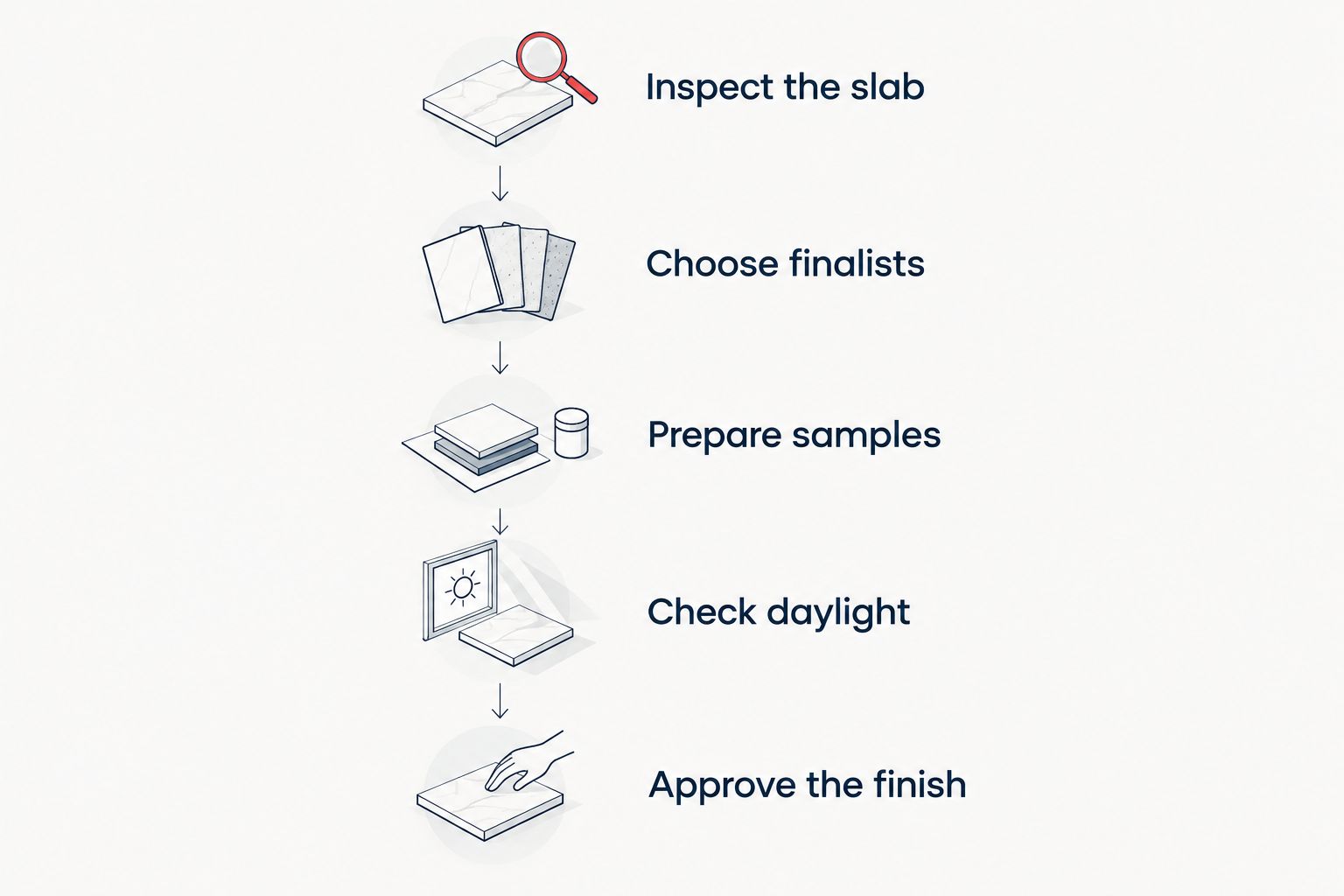
A test area is an approval tool, not a promise of identical color across every part of the driveway. Ask how repairs and differently weathered sections will appear. If uniform coverage is your priority, discuss whether staining is the right finish at all.
Stain color is not the same as stain system
Color describes appearance. The system determines preparation, application, and compatibility with the surface and protective finish. Do not order a driveway treatment by color name alone.
Acid-reactive stains develop color through a chemical reaction with suitable concrete surfaces. Pigment-based stains use a different coloring approach. Neither description establishes that a particular product is suitable for your driveway; the selected product's exterior-use instructions govern that decision.
Ask your contractor to explain:
- Whether the selected system is intended for exterior concrete.
- How existing sealers or coatings will be addressed.
- How patches and discolored areas will affect appearance.
- Which protective finish is proposed for vehicle traffic.
- How the finished surface will address traction when wet.
Do not trade traction for gloss. Approve the finish as carefully as the color, particularly where the driveway slopes or connects to a walking route.
Discuss your driveway finish
Talk through driveway condition, decorative concrete, and color selection for your Hampton Roads property.
How the colors are ranked
Warm gray ranks first because it is the least color-committed starting point in this selection. Taupe, sand, charcoal, and terracotta each serve a different exterior-design goal. The ranking uses exterior fit, contrast, slab compatibility, acceptable variation, and maintenance expectations—not laboratory performance testing.
This 2026 guide ranks color families, not manufacturers or contractor workmanship. It does not treat one shade as inherently more durable than another. Preparation, the selected system, and the finished surface require their own assessment.
Which driveway stain color should you choose?
Choose warm gray if you are undecided. Then compare taupe if your exterior is warm-toned, or sand if the whole property uses a light beige palette. Reserve charcoal for deliberate contrast and terracotta for a committed clay-toned scheme.
Concrete Titans provides driveway and decorative concrete contracting in Hampton Roads. Bring your preferred color family into the project discussion, but keep final approval tied to the actual slab sample. That is the practical next move for a 2026 driveway project.
FAQ
What's the best concrete stain color for a Virginia Beach driveway?
Warm gray is the best default in this guide for an understated driveway. Compare it with your permanent exterior materials and approve a sample on the actual concrete before choosing.
Is taupe better than gray for a brick house?
Taupe is the better starting point when warm brick or brown-toned stone defines the exterior. Warm gray remains an option, but the sample's undertone must work beside the masonry.
Can concrete stain hide driveway cracks?
Concrete stain does not repair or reliably conceal driveway cracks. Address the condition of the slab separately, then assess how repairs will look within the stained finish.
Will sand-colored stain cover a dark driveway?
Do not assume sand-colored stain will cover dark concrete like an opaque coating. The underlying slab and selected stain system affect the result, so approve a representative test area.
Is charcoal stain easier to keep looking clean?
Charcoal is not automatically easier to keep looking clean. Pale dust and light deposits contrast with a dark surface, while different marks stand out on lighter colors.
Does sealing change the look of concrete stain?
A sealer can change the apparent color and sheen of stained concrete. Approve a sample with the intended finish rather than relying only on an unfinished stain patch.
How much does driveway staining cost?
Request a project-specific quote for driveway staining. The scope depends on the driveway area, existing condition, preparation, repairs, and selected finish; a color name alone does not define the work.
Can I choose my driveway stain from an online photo?
Use an online photo to narrow your preferences, not to approve the final color. Lighting, photography, and the underlying concrete affect appearance; confirm your choice on the actual driveway.
One last thing
The best-looking color chart can still produce the wrong driveway. Keep an approved sample as your visual reference for the work. Identify the color, preparation, and finish together so nobody treats a shade name as the complete specification.