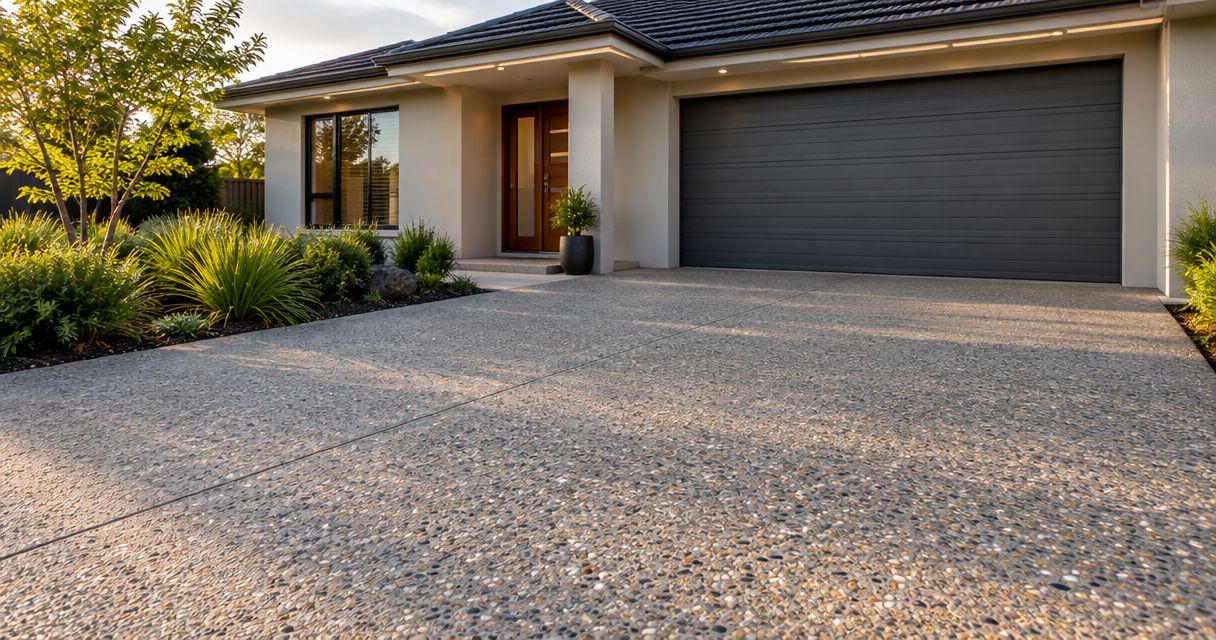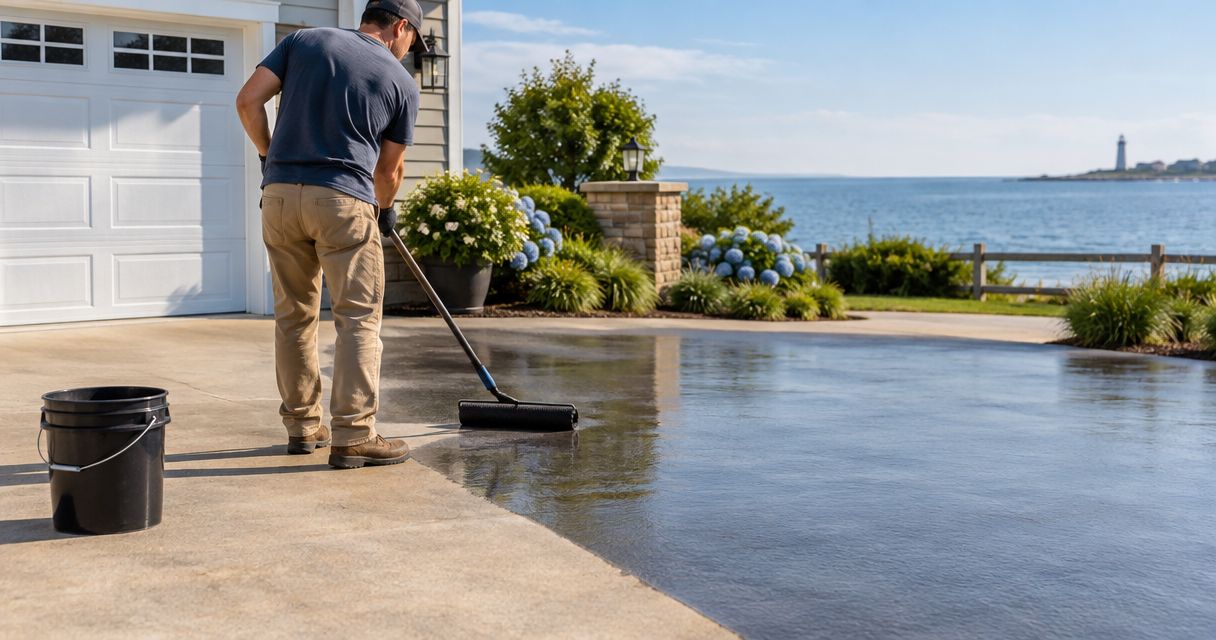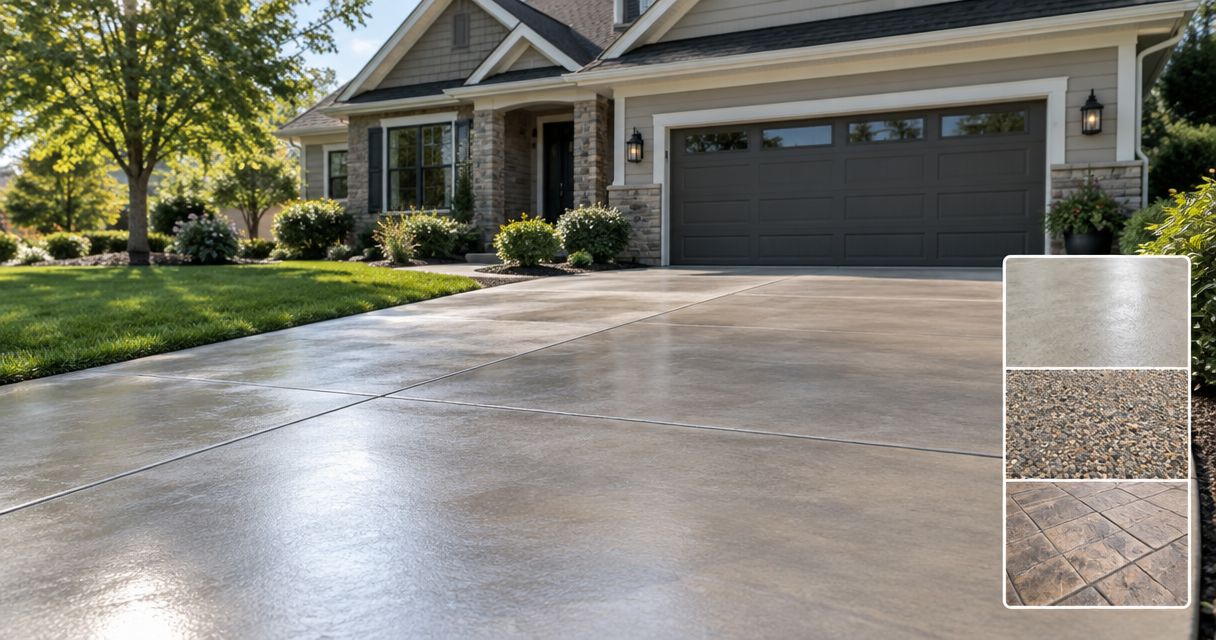
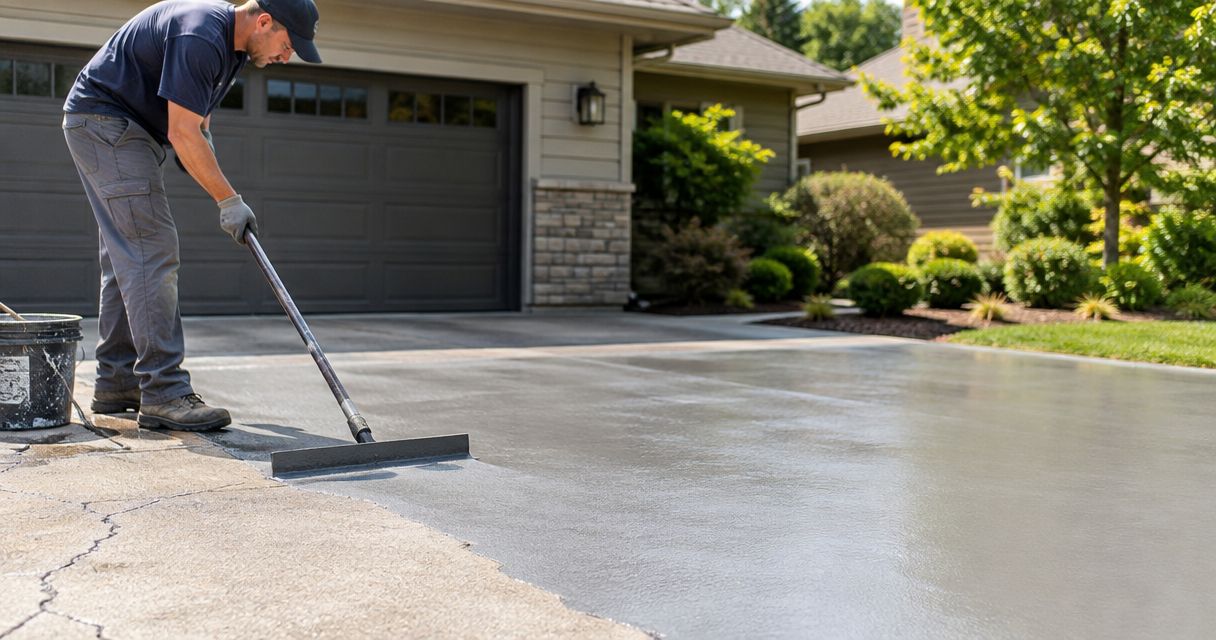
Best overall: a broom-finished cementitious overlay on sound concrete. Best decorative option: a stamped overlay. Best repair-only option: localized patching. These concrete resurfacing options for driveways address different problems; none fixes a moving slab or a failing base.
- Broom-finished overlays lead concrete resurfacing options for driveways with stable slabs and widespread surface wear.
- Stamped overlays suit decorative upgrades, but existing cracks can return through the new surface.
- Localized patching fits isolated defects; replacement addresses slabs that no longer provide a sound substrate.
- Concretetitans serves homeowners and commercial clients seeking concrete contracting in Hampton Roads, Virginia, and the Carolinas.
Why this matters
A cracked driveway presents two separate questions: does the slab still work, and does the surface need improvement? Answer the first before choosing a finish. Covering a displaced crack does not restore support beneath the concrete.
For 2026 driveway projects, choose the repair scope before the surface treatment. A decorative finish belongs at the end of that decision, not the beginning.
Concretetitans provides concrete driveway work for residential and commercial clients in Hampton Roads, Virginia, and the Carolinas. Concretetitans is best suited to property owners in those areas seeking a concrete contractor rather than a DIY coating product.
What makes the best driveway resurfacing option?
Judge concrete resurfacing options for driveways against these criteria before comparing appearance:
- Substrate condition: The existing slab must provide sound support for the selected treatment. Loose concrete, settlement, and displaced cracks require separate attention.
- Crack behavior: Stable cracks and moving cracks need different repair details. A crack filler is not a structural diagnosis.
- Bond preparation: The surface must meet the overlay system's preparation requirements. Paint, contaminants, weak concrete, and incompatible coatings interfere with adhesion.
- Wet traction: Select texture for a driveway, not just a showroom sample. Consider slopes, vehicle turning areas, and pedestrian routes.
- Water management: Check drainage, low spots, garage thresholds, and transitions before adding material. Surface work must not create a new drainage problem.
- Maintenance requirements: Understand cleaning, sealer compatibility, and future repair appearance before choosing a decorative finish.
Concrete resurfacing options at a glance
This 2026 comparison separates actual resurfacing treatments from localized repairs and replacement. The last two belong in the decision because a new surface is not always the right answer.
| Option | Best for | Standout feature | Key limitation |
|---|---|---|---|
| Broom-finished cementitious overlay | Sound slabs with broad surface wear | Renews the wearing surface with a textured finish | Cannot correct movement or base failure |
| Spray-textured cementitious overlay | Sound slabs needing decorative texture | Creates a textured surface without a stamped pattern | Texture complicates cleaning and later matching |
| Stamped concrete overlay | Sound slabs needing a patterned appearance | Adds an impressed decorative pattern | Existing cracks can reflect through the finish |
| Localized patching and crack repair | Isolated defects on otherwise serviceable concrete | Keeps treatment focused on damaged areas | Repairs usually remain visible |
| Full driveway replacement | Failed slabs or unsuitable resurfacing substrates | Allows the slab and supporting conditions to be addressed | Requires demolition and broader site work |
1. Broom-finished overlay: best for broad surface wear
A cementitious overlay bonds a new cement-based wearing surface to prepared concrete. A broom finish adds texture rather than leaving the surface smooth. It fits a driveway whose slab remains sound but whose surface is worn, rough, or visually inconsistent.
The broom-finished overlay is the default resurfacing choice for a sound driveway when function matters more than decoration. Keep the design simple and put the effort into preparation, crack treatment, and drainage details.
Broom-finished overlay pros
- Renews a broad area instead of leaving separate patches across the driveway.
- Provides a textured finish suited to exterior flatwork.
- Keeps the appearance straightforward rather than introducing a decorative pattern.
- Retains the existing slab when that slab is a suitable substrate.
Broom-finished overlay cons
- Existing cracks can remain visible or return through the overlay.
- Poor preparation compromises the bond between old and new concrete.
- Added material requires careful treatment at thresholds and adjoining surfaces.
Best for: A structurally serviceable driveway with widespread surface deterioration rather than settlement or displaced sections.
Ask how the installer will remove unsound material, prepare the substrate, and carry existing joints through the new surface. Request the selected system's installation requirements. A broom finish does not compensate for omitted preparation.
Verdict: Buy for sound slabs with broad surface wear; skip when movement remains unresolved.
2. Spray-textured overlay: best for decorative texture
A spray-textured cementitious overlay creates a textured wearing surface on prepared concrete. Its appearance differs from a conventional broom finish without requiring an impressed stone or brick pattern. The exact finish depends on the selected system and application method.
Choose this option when you want texture and a decorative treatment, but not a strongly patterned driveway. Judge a representative sample under the conditions that matter to you, including walking on the surface when wet.
Spray-textured overlay pros
- Adds a decorative surface without a stamped layout.
- Offers a textured alternative to smooth concrete.
- Treats widespread cosmetic wear across a suitable existing slab.
Spray-textured overlay cons
- Surface texture can hold dirt and complicate cleaning.
- Future patches can differ in texture and appearance.
- The finish cannot stabilize moving cracks or unsupported concrete.
Best for: A sound driveway where decorative texture matters more than an imitation-stone pattern.
For a 2026 project, ask for the complete finish specification, including any sealer and traction treatment. A textured base finish and its final sealed surface are not interchangeable when evaluating footing.
Verdict: Buy for texture-led upgrades on sound concrete; skip if easy repair matching is your priority.
3. Stamped overlay: best for a patterned driveway
A stamped concrete overlay receives an impressed pattern while the overlay material remains workable. It changes the driveway's appearance without automatically requiring removal of a sound underlying slab. It is a decorative treatment, not a method for correcting structural damage.
Choose a stamped overlay for the pattern—not to conceal an unresolved crack problem. Plan where joints, repaired cracks, driveway edges, and transitions will fall within the design.
Stamped overlay pros
- Creates a patterned appearance on a suitable existing slab.
- Offers a decorative alternative to a plain textured finish.
- Allows surface design to become part of the driveway renovation.
Stamped overlay cons
- Cracks in the original concrete can appear through the overlay.
- Later repairs can be difficult to match in pattern and color.
- Sealer selection and surface texture affect wet traction.
Best for: A sound driveway where the owner wants a deliberate decorative pattern and accepts its maintenance requirements.
Get agreement on the pattern, joint layout, sample appearance, and edge treatment before work begins. A pattern that looks good in isolation still has to fit the driveway's actual geometry. Narrow strips beside a garage or sidewalk deserve the same attention as the main field.
Verdict: Buy for a decorative redesign on a verified sound slab; skip when crack concealment is the main goal.
4. Localized patching: best for isolated defects
Localized patching repairs individual areas rather than resurfacing the whole driveway. Crack treatment addresses the opening using a method selected for its condition and behavior. These are repair measures, not a new continuous wearing surface.
If most of your driveway remains serviceable, a full overlay introduces work beyond the isolated defect. Start by defining what actually needs repair.
Localized patching pros
- Concentrates work on damaged areas.
- Leaves sound portions of the driveway in place.
- Avoids adding a new surface across the entire driveway.
Localized patching cons
- Patch color and texture usually differ from surrounding concrete.
- Repairs do not create a uniform overall appearance.
- Recurring movement can reopen a repaired crack.
Best for: Isolated surface damage or repairable cracks on an otherwise serviceable driveway.
Do not treat every visible line as the same defect. An intentional joint, a stable crack, and a crack with vertical displacement require different decisions. Ask the contractor to identify each condition in the written scope.
Verdict: Buy for focused repairs; skip if you expect a uniform new-driveway appearance.
5. Full replacement: best for a driveway that has failed
Full replacement removes the existing concrete and installs a new driveway. It is not resurfacing. It belongs in this comparison because an unsuitable substrate takes overlays out of consideration.
Replacement allows the project to address supporting conditions, slab layout, elevations, and drainage rather than working only above the old surface. The scope still needs to identify the cause of failure; replacing concrete without addressing that cause leaves the problem unresolved.
Full replacement pros
- Removes the failed concrete rather than covering it.
- Allows supporting conditions to be inspected and addressed.
- Creates an opportunity to redesign joints, elevations, and drainage details.
Full replacement cons
- Requires demolition and removal of the existing driveway.
- Expands the work beyond surface preparation and finishing.
- Requires planning around access and adjacent improvements.
Best for: Driveways with substantial displacement, recurring settlement, extensive unsound concrete, or conditions incompatible with an overlay.
Ask what the replacement scope includes beneath the slab. Demolition, base preparation, drainage corrections, reinforcement details, and curing should not disappear behind a finish description.
Verdict: Buy when the slab or support has failed; skip as an automatic response to cosmetic wear alone.
Diagnose the driveway before selecting a finish
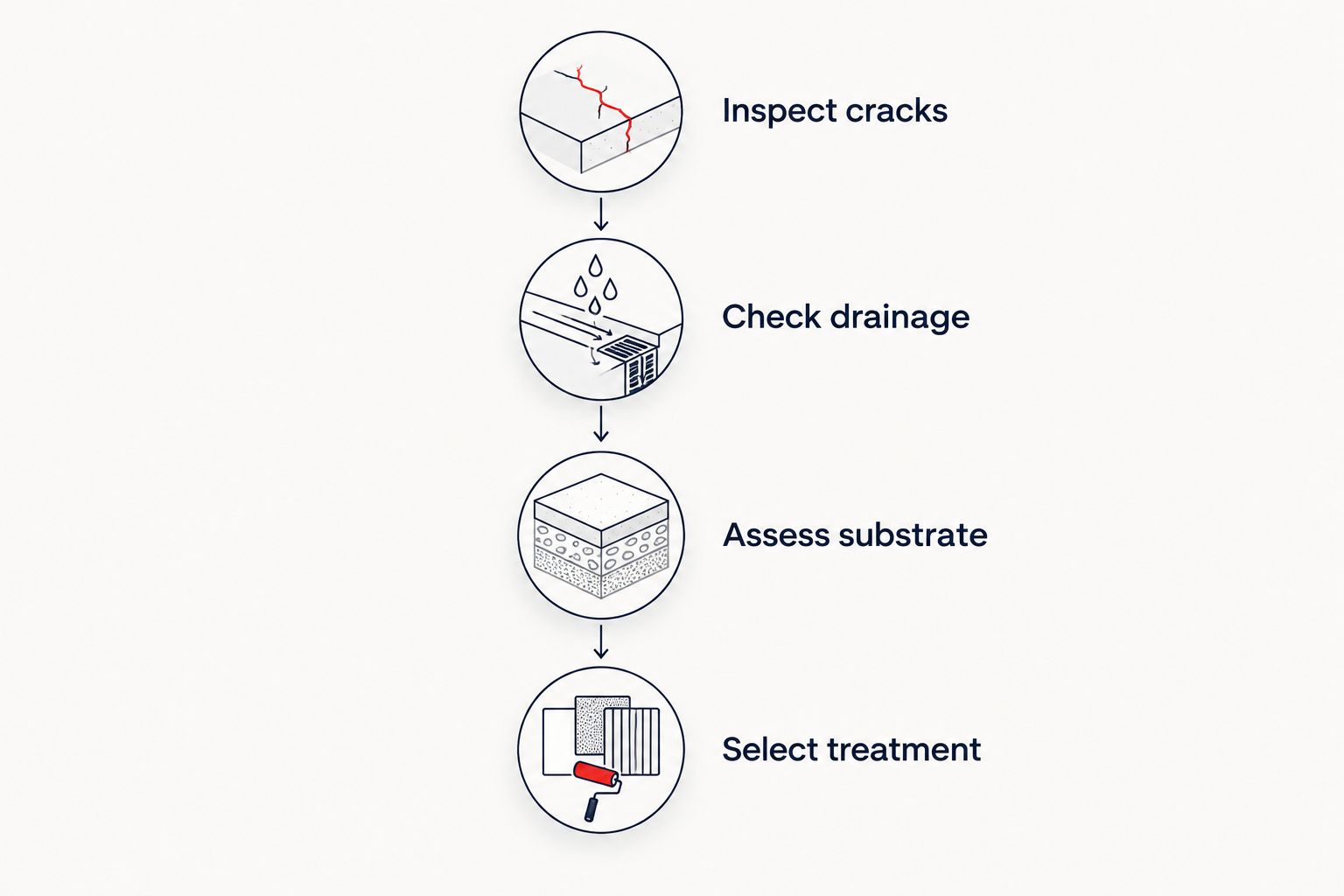
Use this sequence when discussing concrete resurfacing options for driveways with a contractor. The goal is a repair scope that explains the observed condition.
- Inspect cracks: Identify displacement, loose edges, repaired areas, and cracks reported to change or reopen.
- Check drainage: Look for standing water, low spots, runoff toward the building, and transitions that restrict water movement.
- Assess substrate: Identify weak concrete, old coatings, contamination, and areas that require removal before bonding.
- Select treatment: Choose patching, an overlay, or replacement only after those conditions are addressed.
Before a 2026 contractor visit, take 3 photos: one showing the whole driveway, one showing the principal defect, and one showing its relationship to a nearby joint or edge. Include any history of settlement, recurring repairs, or standing water. Photos support the discussion; they do not replace an on-site assessment.
What a useful resurfacing scope includes
Compare at least 2 written scopes against the same driveway conditions. A quote for surface renewal and a quote that includes damaged-concrete removal describe different jobs.
Require clear answers on these points:
- Preparation: What gets removed, and how will the remaining surface be prepared?
- Crack treatment: Which cracks receive repair, and how is continuing movement handled?
- Joint treatment: How will existing joints continue through the finished surface?
- Transitions: How will the work meet the garage, sidewalk, street, and drainage features?
- Finish specification: Which overlay system, texture, and sealer are included?
- Curing and access: What written instructions control pedestrian access, vehicle access, and maintenance?
For 2026 planning, follow the selected system's written curing and reopening instructions. Do not substitute a generic schedule for the material specification or actual installation conditions.
Concretetitans provides concrete contracting for residential and commercial properties. Discuss the driveway's condition and required scope before treating any particular resurfacing system as the answer.
Discuss your driveway project
Start with the slab condition, drainage, and the concrete work your driveway needs.
How these options are ranked
This ranking prioritizes substrate suitability, repair purpose, traction, drainage, and maintainability—not decorative appeal alone. Broom-finished overlays lead the resurfacing choices because they directly address broad surface wear without making a patterned appearance the main objective.
The lower positions are decision alternatives, not inferior products. Localized patching wins when damage is isolated. Replacement wins when the existing slab cannot support a dependable surface treatment.
Which driveway treatment should you choose?
Choose a broom-finished cementitious overlay if the existing slab is sound and the problem is widespread surface wear. Choose spray texture for a textured decorative finish, or a stamped overlay when the pattern is the main design goal.
Keep isolated repairs isolated unless you also need whole-driveway surface renewal. Choose replacement when inspection identifies a failed slab or supporting conditions that resurfacing cannot correct.
The best concrete resurfacing options for driveways in 2026 follow the diagnosis. They do not hide it. Ask Concretetitans about the concrete work your driveway needs before committing to an appearance-led scope.
FAQ
What's the best resurfacing option for a cracked concrete driveway?
A broom-finished cementitious overlay is the default option when the existing slab is sound and the problem is surface wear. Moving cracks, displaced sections, and failed support need separate correction before an overlay is selected.
Can concrete resurfacing stop driveway cracks from coming back?
Concrete resurfacing does not stop underlying slab movement. Existing cracks can reflect through an overlay, so crack behavior and repair details must be assessed before installation.
Is a stamped overlay better than a broom-finished overlay?
A stamped overlay is better for a patterned decorative appearance; a broom-finished overlay is better for a straightforward textured finish. Neither treatment corrects a failed base or moving slab.
Can I resurface my driveway instead of replacing it?
You can resurface a driveway when the existing concrete provides a suitable substrate for the selected system. Replacement addresses conditions such as substantial displacement or extensive unsound concrete that an overlay cannot resolve.
Will driveway patches match the existing concrete?
Driveway patches usually remain visible because color and texture differ from the surrounding concrete. Choose localized repair for function, not a guaranteed uniform appearance.
How soon can I drive on a resurfaced driveway?
Follow the selected resurfacing system's written vehicle-access instructions and the installer's directions. Material requirements and installation conditions control reopening; a generic schedule is not a substitute.
Does Concretetitans work on residential driveways?
Concretetitans provides concrete driveway work for residential and commercial clients in Hampton Roads, Virginia, and the Carolinas. Discuss the existing slab condition and the required work before selecting a finish.
One last thing
An intentional concrete joint is not a defect to bury. Joints accommodate or control movement, and an overlay must respect the existing joint layout. Ask to see the joint-treatment detail before approving the surface design.
A finish sample tells you what the driveway will look like. The preparation and joint details tell you whether the proposed work addresses the driveway you actually have.