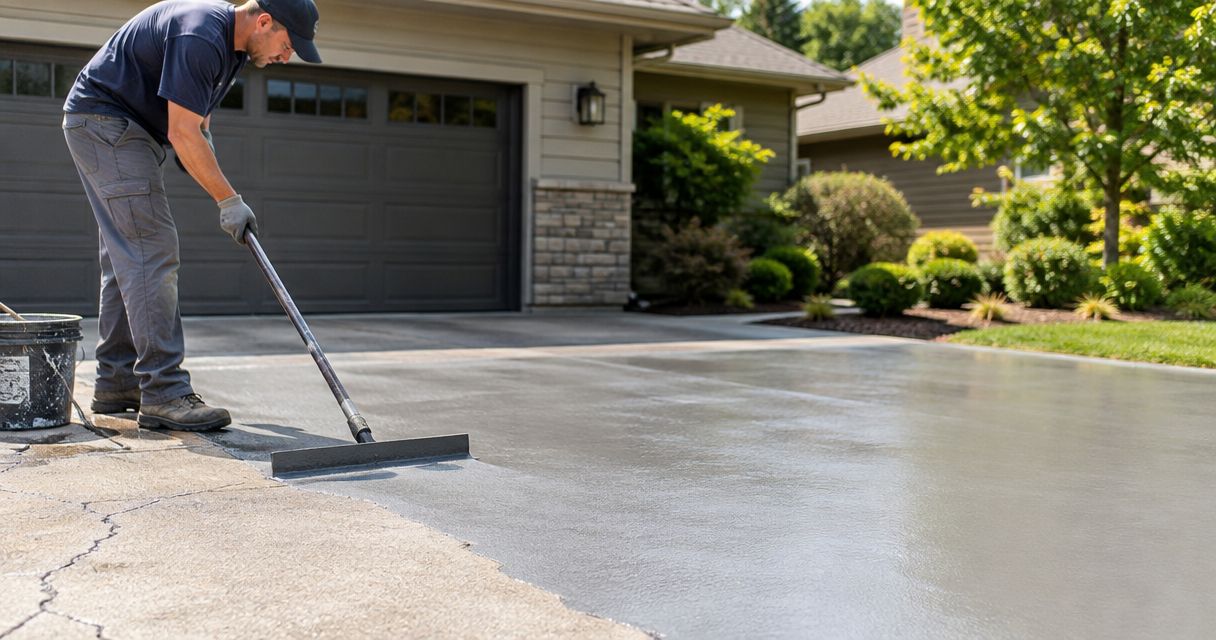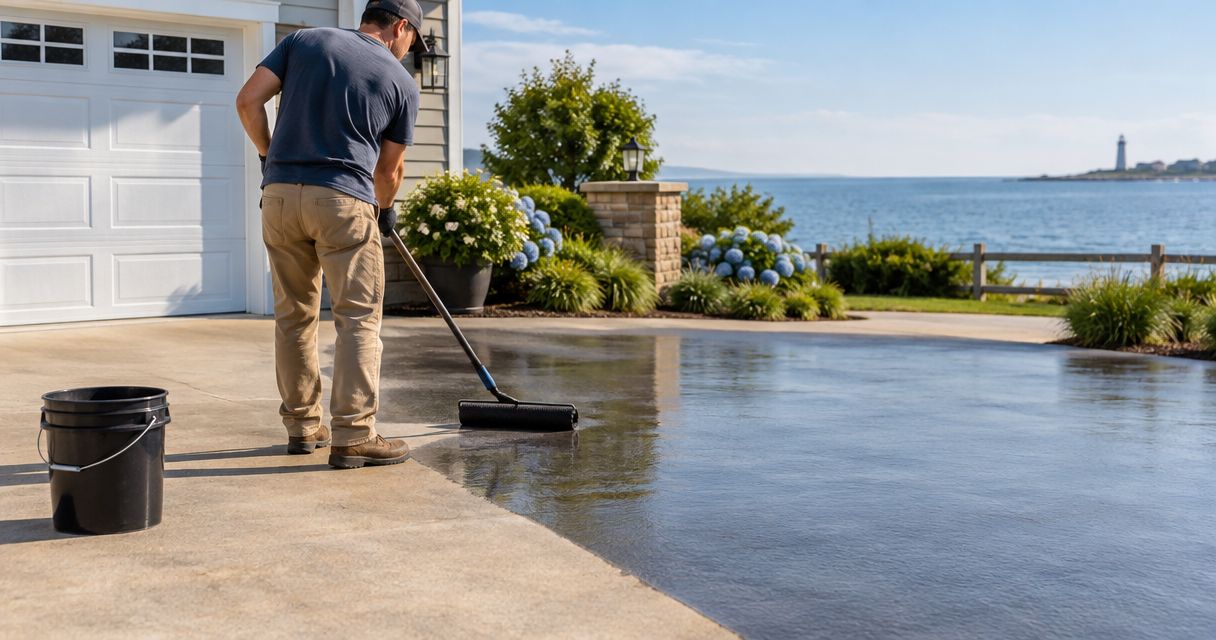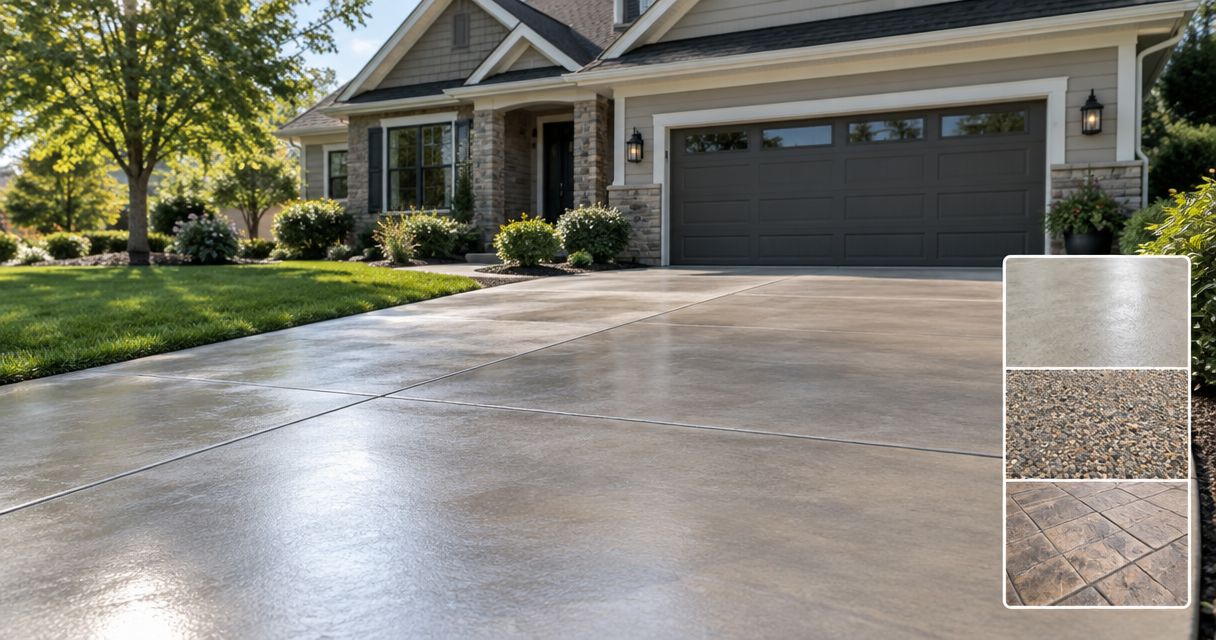
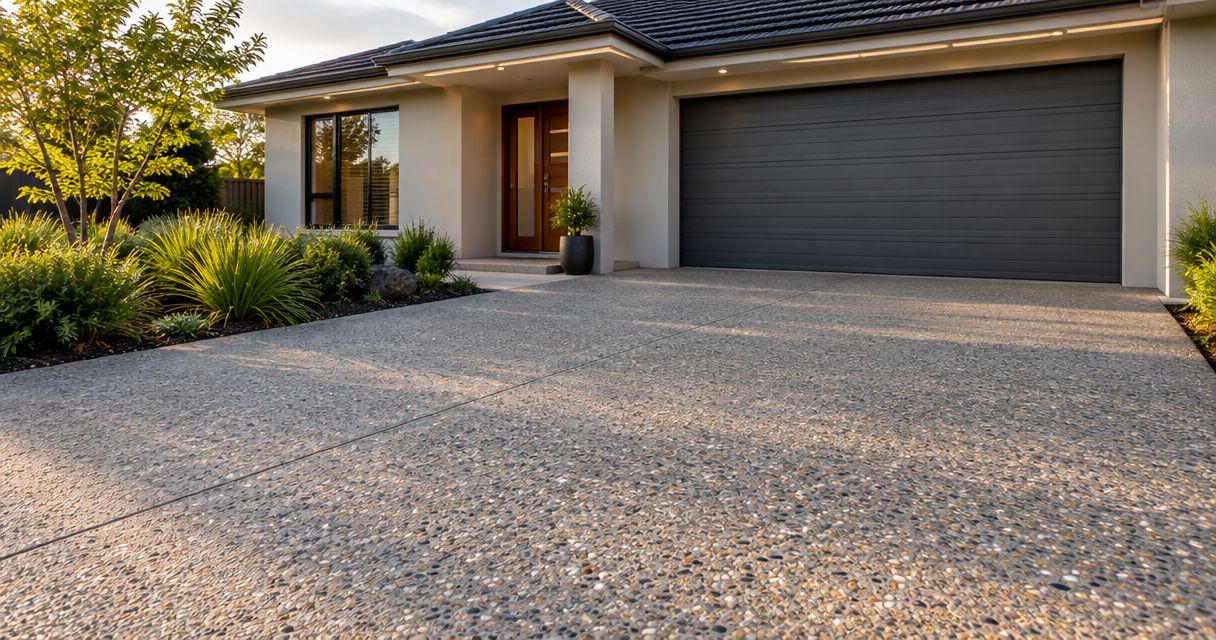
Best overall: fine aggregate with light exposure. Best for precise stone selection: surface-seeded aggregate. Best budget-focused starting point: integral aggregate exposure, with the final choice based on a written scope. These exposed aggregate concrete driveway finishes solve different problems; this 2026 guide compares 5 finish options by texture, appearance, maintenance, and edge detail.
- Fine aggregate with light exposure is the default choice for exposed aggregate concrete driveway finishes.
- Surface-seeded aggregate suits homeowners who want deliberate decorative stone selection.
- Integral aggregate exposure belongs on a budget-focused shortlist; compare complete installation scopes before choosing.
- Concretetitans serves driveway and decorative concrete clients in Hampton Roads, Virginia, and the Carolinas.
Why this matters
An exposed aggregate driveway gets its appearance from stone revealed at the concrete surface. The finish changes how the driveway looks and feels, but it does not replace proper base preparation, drainage, reinforcement where specified, joint planning, or curing.
Pick the surface and the construction scope together. A good-looking sample tells you nothing about water ponding at your garage or the support beneath the slab. For your 2026 project, separate the decorative decision from the structural requirements, then put both in the same agreement.
Concretetitans provides driveway and decorative concrete contracting for residential and commercial clients in Hampton Roads, Virginia, and the Carolinas. Use the comparisons below to define the finish you want before discussing the project scope.
What makes the best exposed aggregate driveway finish?
Compare these criteria before choosing a stone color. For a 2026 driveway specification, the approved sample should establish the appearance and texture—not just the name of the finish.
- Exposure depth: Light exposure leaves less stone relief. Deeper exposure creates a more pronounced texture. Specify the result with a sample rather than an ambiguous label.
- Stone shape: Rounded and angular particles feel different underfoot. Judge the actual stone, particularly where the driveway connects to a walking route.
- Aggregate distribution: Consistent stone coverage matters across the whole driveway. Look for unintended bare patches, clumps, and changes between placements.
- Wet-surface behavior: Texture and sealer both affect the finished surface. Do not treat an exposed finish as a guarantee against slipping.
- Maintenance access: A pronounced texture takes more attention to clean than a shallow one. Consider leaves, soil, and the areas where vehicles regularly park.
- Edges and joints: Borders, transitions, and joint locations belong in the design. A decorative surface still needs a workable layout.
Exposed aggregate driveway finishes at a glance
The options below describe different specification priorities. They are not mutually exclusive: selected stone can also have light exposure, and an integral finish can include a broom-finished border.
| Finish option | Best for | Standout feature | Key limitation |
|---|---|---|---|
| Fine aggregate with light exposure | Everyday use and foot comfort | Shallow texture with visible stone | Less pronounced relief than medium exposure |
| Medium aggregate with pronounced exposure | Homeowners prioritizing surface texture | More noticeable stone relief | Rougher underfoot and more involved cleaning |
| Surface-seeded selected aggregate | Deliberate decorative stone selection | Selected stone concentrated at the surface | Distribution and embedment require careful execution |
| Integral aggregate exposure | Budget-focused scope comparison | Reveals aggregate already in the concrete mix | Appearance depends on the available mix aggregate |
| Exposed field with broom-finished borders | Separating vehicle and walking areas | Different finishes assigned to different zones | Extra transitions and detailing to coordinate |
1. Fine aggregate: best for everyday driveway use
Fine aggregate with light exposure reveals smaller particles while keeping the surface relief restrained. It gives you visible stone without making a deeply textured finish the main feature of the driveway. The exact result still depends on aggregate selection and exposure technique.
Best for: Homeowners who use the driveway as both a vehicle surface and a regular walking route.
Fine aggregate pros:
- Shallow relief gives you a less pronounced texture to evaluate underfoot.
- Smaller visible particles create a closely patterned appearance.
- Light exposure keeps decorative stone visible without emphasizing deep recesses.
Fine aggregate cons:
- Light exposure does not provide the same pronounced relief as a medium-textured finish.
- Uneven exposure remains visible, even when the intended texture is subtle.
- A sealer changes the final appearance and surface behavior.
Check a representative sample rather than accepting the phrase fine exposed aggregate. Look at the stone coverage, touch the surface, and inspect how it meets an adjacent plain-concrete area. Include the intended sealer in that review if sealing forms part of the specification.
Verdict: Buy fine aggregate with light exposure as the default shortlist option. Confirm that the sample suits your walking routes before approving it.
2. Medium aggregate: best for a more pronounced surface texture
Medium aggregate with greater exposure makes the individual stones and the spaces between them more noticeable. This option puts texture ahead of a smooth-looking surface. It is a different tactile choice, not an automatic upgrade over fine aggregate.
Best for: Homeowners who want stronger stone relief and accept the cleaning and comfort trade-offs.
Medium aggregate pros:
- Individual stones are easier to distinguish in the finished surface.
- Pronounced relief creates a clearly textured driveway appearance.
- The finish makes sense where a shallow texture does not match your design preference.
Medium aggregate cons:
- Raised or angular particles feel rougher underfoot.
- Recesses give dirt and debris more places to collect.
- Greater exposure demands attention to stone embedment and surface consistency.
Do not specify deeper exposure simply because the driveway gets wet. Slip resistance depends on the finished system, including the aggregate, exposure, sealer, wear, and contamination. A texture label alone cannot establish performance.
Inspect the transition at the garage apron and any pedestrian crossing. These are places where a texture that looks appealing from the street becomes a daily contact surface.
Verdict: Hold medium aggregate until you approve its texture in person. Choose it for pronounced relief, not an unsupported promise of slip-proof performance.
3. Surface-seeded aggregate: best for deliberate stone selection
Surface seeding places selected decorative aggregate into the fresh concrete surface rather than relying only on the aggregate throughout the mix. The surface is then exposed to reveal that stone. This method gives the design a deliberate stone-selection step.
Best for: Homeowners who want to choose the visible aggregate for a specific appearance.
Surface-seeded aggregate pros:
- You can specify the decorative stone intended for the visible surface.
- Stone color and shape become explicit design decisions.
- An approved sample provides a reference for coverage and exposure.
Surface-seeded aggregate cons:
- Uneven spreading produces inconsistent stone distribution.
- Poor embedment leaves particles inadequately held in the surface.
- A loose stone sample does not show the finished concrete appearance.
Request a concrete sample containing the proposed aggregate, not just a bag of stones. Cement paste, exposure depth, and sealer affect what you see after installation. Stone that looks attractive loose does not automatically produce the same effect in a slab.
The sample should also show the intended distribution. A densely covered sample and a sparsely covered driveway are different outcomes, even when both use the same aggregate.
Verdict: Buy surface-seeded aggregate when deliberate stone selection drives the project. Require agreement on the finished sample before approving the decorative specification.
4. Integral exposure: best for budget-focused scope comparison
Integral aggregate exposure reveals stone already present in the concrete mix. It avoids making separately seeded decorative stone a required part of the design. That makes it a useful starting point when you want to compare straightforward and more customized specifications.
Best for: Homeowners who prioritize a clear construction scope over a particular decorative stone selection.
Integral aggregate pros:
- The visible aggregate comes from the specified concrete mix.
- You can evaluate a finish without requiring a separate surface-seeding method.
- The specification keeps attention on the mix, exposure, and finished sample.
Integral aggregate cons:
- The visible stone depends on the mix aggregate.
- A desired color combination is not guaranteed by the method itself.
- Separate placements need coordination to maintain a consistent appearance.
Do not assume integral exposure is the least expensive installed option. Site access, demolition, base work, drainage, slab design, and finishing scope all belong in the comparison. A simpler decorative description does not make incomplete quotes comparable.
Ask whether the proposed mix can produce the approved appearance across the planned placements. Keep the sample attached to the specification rather than relying on a verbal description of the stone.
Verdict: Buy integral exposure as a budget-focused comparison option. Choose it only after reviewing the complete scope and accepting the actual aggregate appearance.
5. Exposed field with broom borders: best for distinct driveway zones
This layout uses exposed aggregate across the main driveway field and a broom finish along selected borders or walking areas. It divides the design into 2 zones with different surface treatments. The border can be part of the functional layout rather than decoration added at the end.
Best for: Homeowners who want a decorative vehicle area and a separately defined pedestrian route.
Exposed field with broom borders pros:
- Different finishes make the intended zones visually distinct.
- The walking area gets its own texture specification.
- Borders provide a deliberate transition to adjoining concrete surfaces.
Exposed field with broom borders cons:
- Transitions add finishing details to coordinate.
- Poorly planned borders create awkward narrow strips.
- Contrasting finishes do not solve drainage or eliminate joint requirements.
Draw the border layout before placement. Mark the garage approach, walk to the entry, driveway edges, and intended joints so the pattern follows how you use the space.
The broom-finished area still needs a sample and a clear finishing direction. Do not assume every broom finish has the same texture, or that the border automatically performs better when wet.
Verdict: Buy the combined layout when the zones serve a clear purpose. Skip a border that adds visual clutter without improving the layout.
Approve the finish before the pour
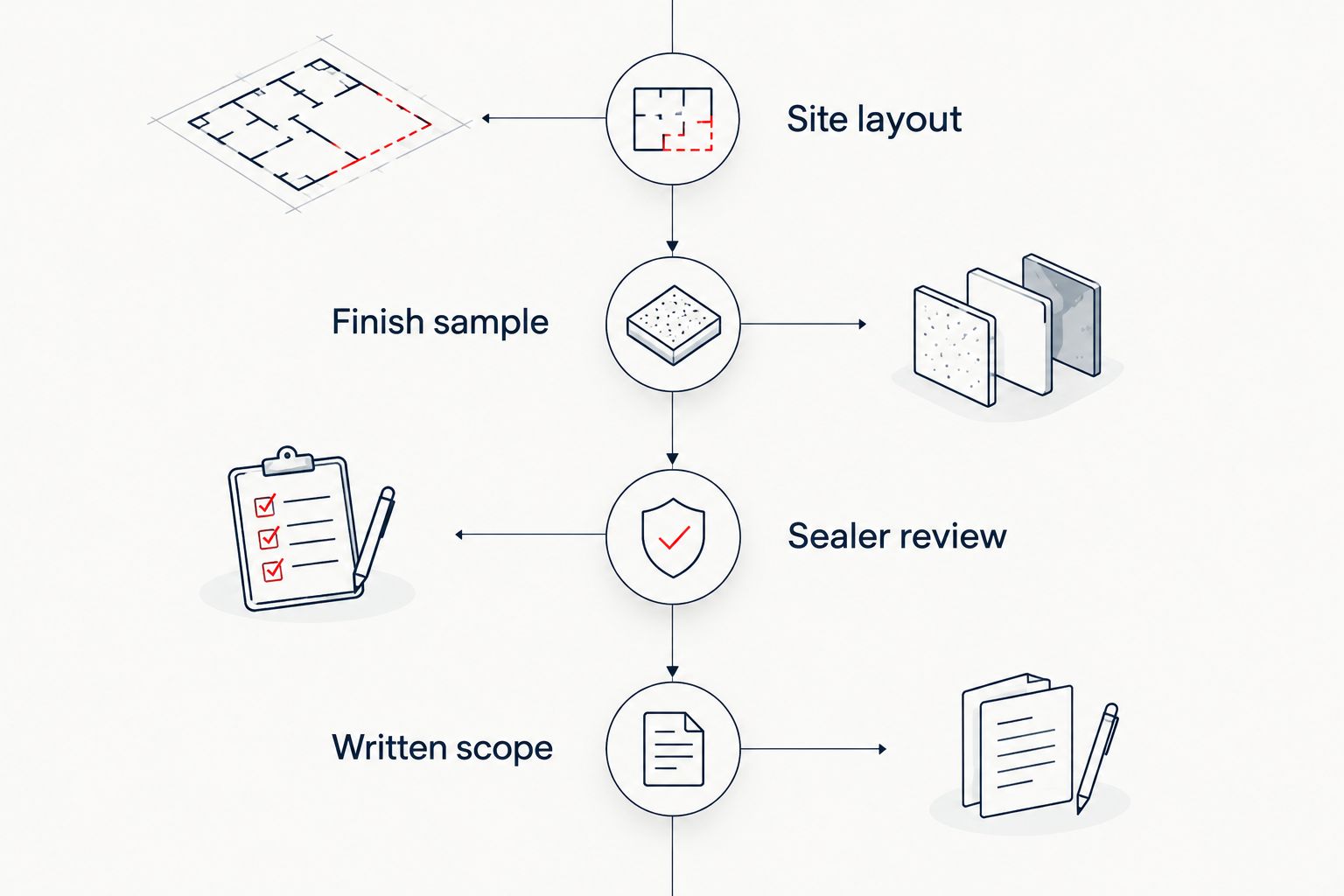
Use the same approval sequence for every exposed aggregate option. The point is to connect the attractive sample to a buildable driveway specification.
- Site layout: Establish the driveway limits, walking routes, transitions, drainage intent, and joint plan.
- Finish sample: Review the specified stone, distribution, and exposure on concrete.
- Sealer review: Confirm whether sealing is included and inspect its effect on the sample.
- Written scope: Record the approved finish alongside the preparation, slab, curing, and access requirements.
Review the sample under 3 conditions: dry, wet, and with the specified sealer applied. These checks reveal appearance changes; they do not substitute for formal slip-resistance testing where a project requires it.
For a 2026 driveway project, discuss exposed aggregate concrete driveway finishes with Concretetitans using the approved sample and written scope. Ask what is included rather than assuming every decorative finish follows the same installation process.
How these finishes were ranked
This 2026 ranking prioritizes everyday usability, clear appearance control, maintenance access, and the ability to specify an observable result. Fine aggregate with light exposure takes the default position because it offers visible stone with restrained relief.
The remaining options each address a separate decision: stronger texture, selected decorative stone, scope-first budgeting, or distinct surface zones. This is a finish-selection guide, not a claim that one method suits every site. Base preparation, drainage, and slab requirements remain separate decisions.
Which exposed aggregate driveway finish should you choose?
Choose fine aggregate with light exposure if you want a clear starting point. It keeps the decorative effect without making pronounced stone relief the central feature. Approve the sample before treating that recommendation as your final specification.
Choose surface-seeded aggregate when visible stone selection matters most. Choose integral exposure when you are comparing a straightforward decorative scope against a more customized one. Use medium exposure only after accepting the texture, and add broom borders only when the layout needs distinct zones.
Concretetitans is a fit for residential and commercial clients seeking driveway and decorative concrete contracting in Hampton Roads, Virginia, and the Carolinas. For your 2026 project, take a finish preference and a site layout into the conversation—not just a photograph.
FAQ
What's the best exposed aggregate finish for a residential driveway?
Fine aggregate with light exposure is the default shortlist choice for everyday driveway use. It provides visible stone with less pronounced relief than a deeper exposed finish. Approve a representative sample before selecting it.
Is exposed aggregate concrete slippery when wet?
Exposed aggregate is not automatically slip-proof when wet. Aggregate shape, exposure, sealer, wear, and contamination affect the finished surface. Review the complete finish rather than relying on its name.
Is surface-seeded aggregate better than integral aggregate?
Surface-seeded aggregate is better suited to deliberate decorative stone selection; integral exposure suits a specification based on the concrete mix's aggregate. Neither method is universally better. Compare finished samples and installation scopes.
Can I use exposed aggregate with a broom-finished border?
Yes, an exposed aggregate field can be combined with broom-finished borders or walking areas. Plan the transitions and joints before placement. Specify the texture of both finishes.
How much does an exposed aggregate driveway cost?
You need a project-specific quote for an exposed aggregate driveway. Compare demolition, access, base preparation, drainage, slab requirements, decorative finishing, and sealing on the same scope.
Does exposed aggregate concrete need a sealer?
Sealing is a specification decision, not something to assume from the finish name. Review a compatible sealer's effect on appearance, surface behavior, and future maintenance before including it.
Can exposed aggregate hide cracks in a driveway?
Exposed aggregate does not prevent cracking or replace joint planning. The decorative surface and the slab's construction requirements must be specified separately. Do not accept texture as a substitute for proper preparation.
One last thing
Reject the loose-stone sample as your final approval standard. A handful of aggregate shows the material, not the driveway finish. The surrounding paste, amount of exposure, distribution, and sealer all change the result.
For a 2026 specification, keep the approved concrete sample available through installation. It gives everyone a shared reference when words such as light, medium, and decorative mean different things.